The Role of Dissent Records in Strategic Decision-Making
Recording disagreement in writing prevents strategic mistakes from repeating.
Executives spend roughly 40% of their time on decisions, and one in three major strategic decisions is reversed within 18 months. That is a structural failure, not a marginal one, and it shows in the numbers boards track: McKinsey's 2025 research found that top-quartile organizational health delivers about three times the shareholder returns of bottom-quartile health. The gap between good process and bad process is not academic. It appears on a balance sheet.
Oddly, most executive teams already have more information than ever: dashboards, forecasts, competitive intelligence, real-time analytics. Data volume isn't the failure point. It's interpretation, context, and whose voice actually gets a hearing when the room starts converging on an answer.
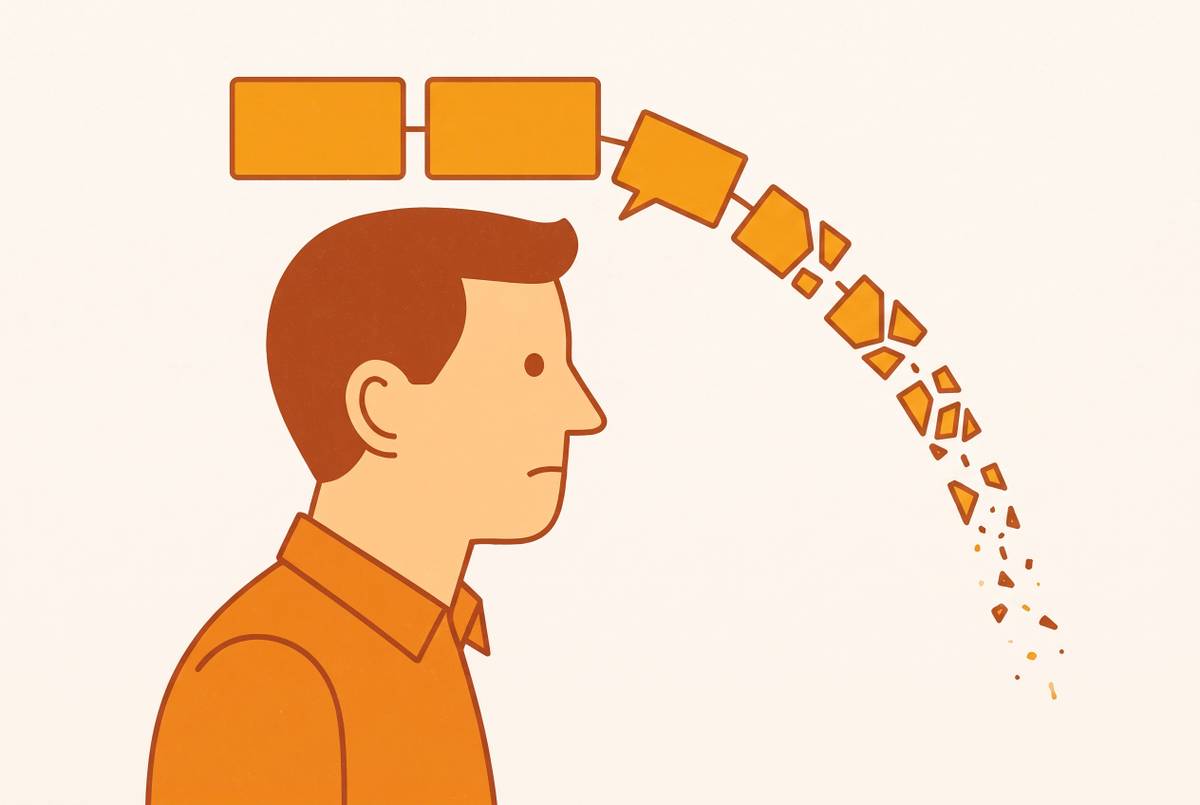
That's where dissent goes missing. Minority views, objections, and alternative framings, the friction that forces a team to test its own logic before committing capital or headcount, arise in the room and then vanish from the record. Someone raises a concern, the meeting moves on, and months later nobody can reconstruct who said what or why it was overruled. This is the gap dissent records are built to close.
None of this is a talent problem: smart people, in an environment with no mechanism for preserving disagreement, will still produce bad decisions at a predictable rate. The environment is the variable to fix.
Dissent records: definition and limits
A dissent record is a formal, structured notation, made during or right after a decision meeting, capturing the minority views, objections, and alternative framings that didn't win. That's the whole definition. Unlike a transcript, which records everything indiscriminately, a dissent record selects and structures the opposing view. Nor is it meeting minutes: minutes record what was decided, while a dissent record documents what was argued against it. It's also not a grievance log; it looks forward, to what could go wrong, what alternative existed, what risk was waved through.
A useful one has a handful of fixed parts. It names the decision being documented. It states the dissenting position in the dissenter's own words, not smoothed into something the majority prefers. It records the specific concern or alternative raised, who raised it, and states whether that concern got addressed before the decision was finalized. Strip any of those out and the record stops doing its job.
There's precedent outside the strategy room: regulated-industry corporate boards have long used formal dissent notations in board minutes as legal protection, letting a dissenting director later point to that record. The practice simply hasn't migrated down into team and executive-committee decisions the way it should have.
A dissent record is not the same thing as a devil's advocate assignment. A devil's advocate manufactures challenge on demand; a dissent record instead captures challenge that arose on its own, preserving it regardless of whether it changed the outcome.
How groupthink operates in senior decision rooms
In academic literature, strategic dissent means divergence in ideas, preferences, and beliefs about strategic direction, and it shapes firm performance because it shapes how decisions get made. The intuitive story is that more cognitive diversity produces better decisions, but four decades of empirical research haven't consistently supported it. Diversity of viewpoint only pays off if those viewpoints get exchanged, argued over, and actually integrated into the decision, not just voiced and dropped.
That qualifier matters more than it looks. Dissent that disrupts the normal exchange and integration of ideas can make decisions worse, not better. The goal was never to manufacture more conflict but to preserve disagreement that's already there, rather than let it evaporate as consensus forms.
Why does it evaporate? A few forces do the work, mostly quietly. Status asymmetry is one: junior people self-censor before senior decision-makers, often unnoticed. Consensus pressure is another: the group settles on a direction before every alternative gets a real look. Outcome bias adds to both: once a decision gains momentum, objecting feels like obstruction rather than improvement, even when sound.
If a dissenting view never gets written down, it effectively never happened. The person who raised it has no standing later to say the concern was flagged and ignored. Decisions made inside an echo chamber lack depth because alternatives were only heard and set aside, never evaluated on merit, and resilience against the unexpected requires that evaluation.
So if dissent gets heard in the room but not preserved past it, the fix is better documentation. It's better documentation.
What dissent records do for decision quality
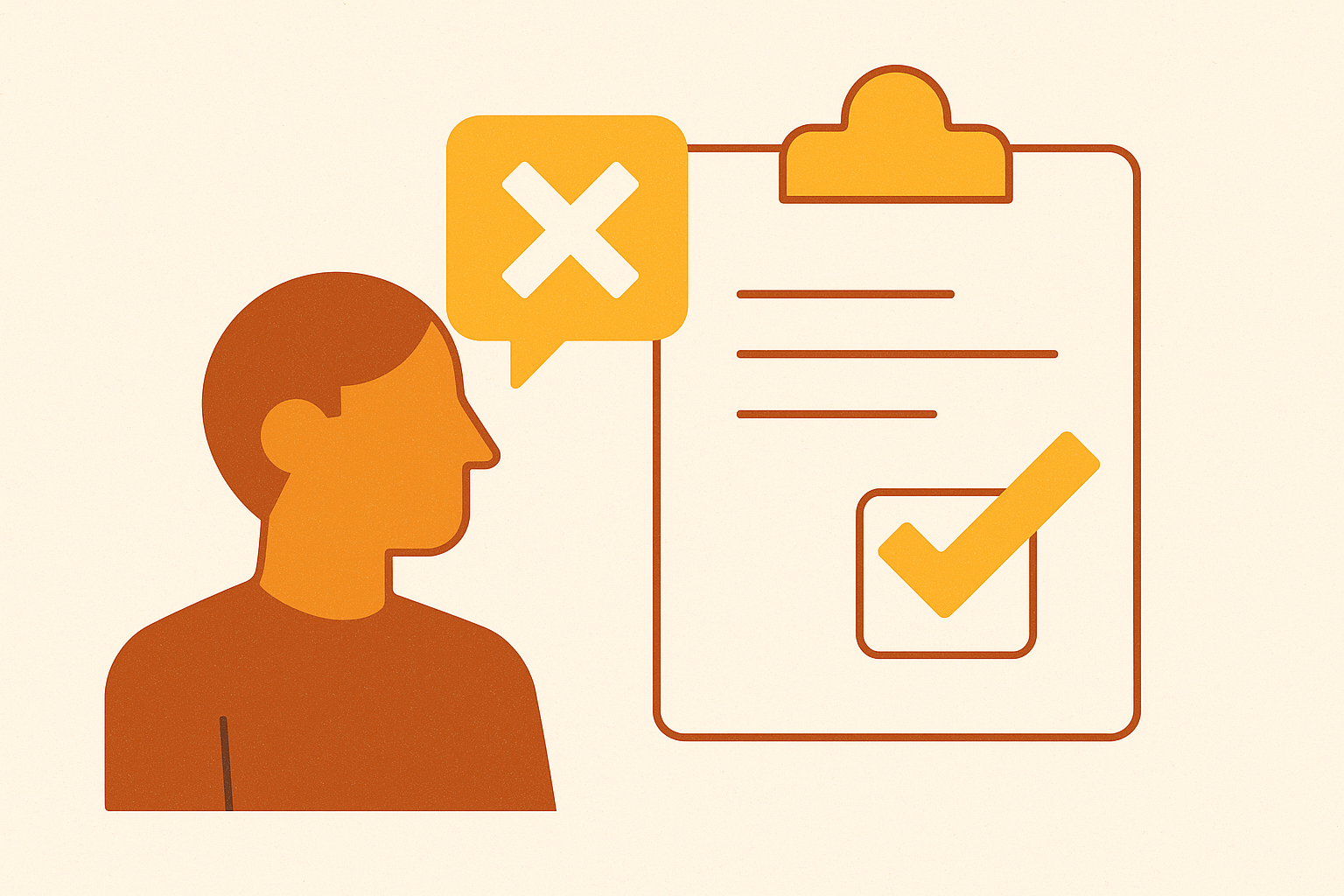
Once a dissent record exists, disagreement shifts from social risk to contribution. This is the first, most underrated effect: legitimizing objection changes room behavior, since raising a concern now adds to the record instead of just souring the mood. It also separates decision from deliberation: a team can commit fully to a direction while acknowledging on paper it wasn't the only reasonable option.
The practical payoff appears once the decision is revisited, reversed, or audited. When a strategic decision gets revisited, reversed, or audited, the dissent record shows the risk was or wasn't anticipated and how the team weighed it at the time. That one-in-three reversal rate won't disappear because a form exists. It doesn't stop reversals; it changes what the organization can learn from one: the concern was or wasn't foreseen, by whom, and what happened to that warning before the fallout. Without the record, people misremember what they knew and when, since hindsight rewrites the story. The record fixes the knowledge state at the moment the decision got made, before memory gets to edit it.
There's a personal protection built into all this too. A named, recorded objection protects its author from blame for an outcome they flagged as risky in advance. That's a significant perk. It's often the difference between a culture where people speak up and one where they learn not to.
None of this should get oversold, though. A dissent record doesn't generate better alternatives; it only preserves whatever a human actually raised in the room. If nobody thought of the right objection, the record stays silent on it. Nor does it prevent bad decisions; a team can override a documented objection and still be wrong, and the record can't stop that. What it creates is accountability, a distinct thing from correctness. And if dissent is recorded without ever being genuinely weighed, the practice curdles into compliance theater: paperwork that looks like rigor but functions as nothing.
Building a dissent record practice
Not every meeting needs one. Applied everywhere, the practice collapses under its own weight before proving useful.
Ownership matters just as much as scope. The decision-maker should never own the dissent record, since they have a stake in how it reads later. A designated note-taker, a chief of staff, or a rotating role with no authority over the outcome is the right home for it. The dissenter also deserves to review and correct their own recorded position before finalization, or it risks becoming a paraphrase they wouldn't recognize.
Keep the content itself narrow. Five fields cover the minimum viable version: the decision in one sentence, the dissenting position in the dissenter's own framing, the basis for that position, how it got resolved (addressed, incorporated, or overridden, and why), and who raised it BibiGPT Blog. A structured template beats free-form notes, which get summarized into mush the first time someone's rushed. Brevity isn't optional; it's the difference between a practice that survives and one that dies quietly. Store it wherever the decision itself lives, not in some separate archive nobody opens again.
Watch for the ways this quietly fails. Dissent gets softened in the writing, "some concern was raised" rather than naming it and its source, and a good template should discourage that. Records get created and then never consulted again, so build the habit of reading them at the start of any review of that decision. If the most senior person in the room never dissents on record, nobody beneath them will either. The culture must start at the top, or the exercise reads as theater to everyone below. Any decision the team expects to revisit within 18 months should be captured in a dissent record.
How AI meeting tools make dissent records practical at scale
Timing creates the friction: dissent records need real-time capture, structuring, and storage of nuanced disagreement, in exactly the meetings where attention is thinnest and stakes highest. That's a hard ask for a human note-taker also trying to track the decision as it unfolds.
AI meeting tools change what's possible here in a few concrete ways. Accurate transcription gives raw material to pull dissenting statements from later, instead of relying on memory or rushed notes. Speaker identification makes attribution workable, which is non-optional for a dissent record; a tool that can't tell voices apart can't name who said what. AI summaries, aimed correctly, can surface disagreement and unresolved concerns in a transcript, rather than forcing someone to re-listen to an hour of audio for one objection. Searchable meeting history means a dissent raised months ago is retrievable when the decision is revisited, turning organizational memory into something usable rather than hoped-for.
Accuracy across the leading tools has largely converged. A six-week evaluation of more than fifty real meetings found top tools hitting 90 to 95% accuracy or better in English BibiGPT Blog. That's table stakes now, not a differentiator. What separates tools is what happens after the transcript exists.
And that's the gap most vendors still leave open. A transcript is not a dissent record: AI captures everything indiscriminately, so a person still has to identify which parts constitute genuine dissent and structure them. The best tools shrink that work. None of them eliminate the human judgment call at the center of it.
Architecture matters more than it sounds like it should. A visible bot in a board-level or executive meeting changes room behavior, and self-censorship is exactly the failure mode a dissent record practice exists to prevent. Local, botless audio capture on the host's device, with no visible recording participant, better preserves the room's natural character, though consent and notification obligations still apply regardless of architecture. Capture alone isn't enough: a dissent record earns its keep only if it lives where the decision lives, so tools routing structured notes into a shared decision log close the loop, while siloed tools do not.
Reviewing AI meeting tools that can support a dissent record workflow
Four things matter here: transcription accuracy, reliable speaker identification, searchable history, and integration with wherever the organization stores its decisions. Weigh those against pricing and architecture, and the rest is mostly noise.
Several tools confirmed in current sources hold up reasonably well against that frame. One botless option added a bot-free recording mode in a recent update and offers unlimited recording and transcription on its free tier, with roughly 94% English accuracy, transcription across 38 languages, and native summarization in seven, team pricing runs $19 a month per user, or $15 billed annually Simular BibiGPT Blog. It suits an individual wanting clean capture without a visible bot, though its thin post-meeting workflow limits how well it routes structured dissent into a shared repository Simular BibiGPT Blog.
A bot-based alternative, where the assistant joins the call as a visible participant, runs about 93% English accuracy but makes up for it with more than fifty native integrations, including Salesforce, HubSpot, Slack, Asana, and Notion, at $18 a month on the pro tier and $29 on business. That integration depth is the strongest argument for this use case, since structured dissent content can be pushed directly into wherever the decision log sits. The tradeoff is the visible bot itself, to be weighed before use in a sensitive deliberation.
A third option defaults to a bot joining the call but offers a bot-free alternative through its desktop app, hits around 95% accuracy in English, and drops to 80 to 85% in multilingual settings, with a free tier at 300 minutes a month and a pro plan at $16.99. It works well for English-dominant teams, but the multilingual gap is a real constraint for global organizations running strategic sessions across languages.
A fourth tool supports both bot and botless modes, leans into compliance features that enterprise buyers tend to require, and covers more than 30 languages at $18 a month on its pro tier. That compliance orientation and multilingual reach suit organizations where a dissent record might carry regulatory weight beyond its internal purpose.
A fifth option covers the meeting lifecycle end to end, structured agendas going in, accurate transcription and AI notes during the call, and a follow-through agent afterward, starting at $7 a month and named the top AI note-taker and meeting transcription tool by The New York Times Wirecutter Simular. Its agenda-first design fits a dissent record practice well, structuring the meeting beforehand rather than only cleaning up afterward Simular.
Jamie, a botless tool built around local audio capture with a privacy-first design, scored highest on transcription and speaker identification in a five-tool test run against an earnings-call recording, making it a strong fit for privacy-sensitive decision meetings, though its integration depth trails the bot-based tools on this list.
A seventh, also botless, runs on Mac and Windows plus mobile, with cloud-based audio transcription, a free tier covering 25 meetings a month, and a paid tier at $12 Simular. It shows no visible recording indicator, helping with self-censorship, but limited integrations and no post-meeting automation mean captured dissent must be filed manually, a real friction point for this workflow Simular.
None of these tools builds a dissent record on its own. The judgment of what counts as dissent, and the discipline to write it down honestly, still belongs to the people in the room.
Sources
- 7 Best AI Meeting Transcription & Note-Taking Tools (2026) | BibiGPT Blog
- Best AI Meeting Note Takers in 2026: Hands-On Review of 8 Tools
- Executive Decision-Making Statistics 2026: Data on How Leaders Decide, What Goes Wrong, and What Actually Helps
- (PDF) The Impact of Strategic Dissent on Organizational Outcomes: A Meta-Analytic Integration
- Organizational dissent - Wikipedia
- Groupthink in Contemporary Decision Making: A Failure to Dissent | Request PDF
- The impact of strategic dissent on organizational outcomes: A meta‐analytic integration - Samba - 2018 - Strategic Management Journal - Wiley Online Library
- Strategic Dissent: Expressions of Organizational Dissent Motivated by Influence Goals: International Journal of Strategic Communication: Vol 3 , No 1 - Get Access