Linking Decisions to Outcomes in Long-Running Projects
Long-running projects need decision trails that survive beyond human memory.
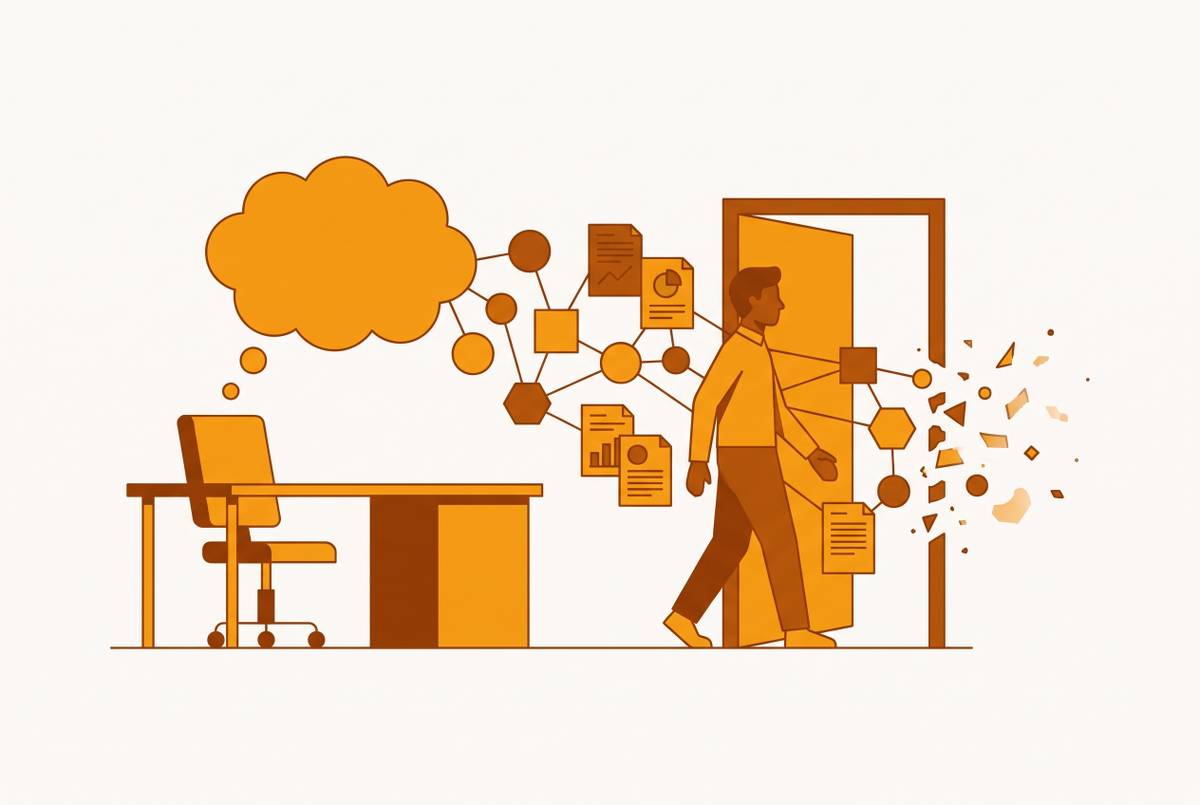
In a project that runs 18 months, studies show participants forget 50% of meeting content within 24 hours (per Atlassian research cited in Simular's review), so the person who made a call may not even remember making it.
Every new decision in a long project gets built on the last one, and a half-remembered decision cracks the foundation of the whole project before anyone notices, because each subsequent decision inherits and compounds that gap. This is not a failure of any one person's diligence. It is what happens by default when nothing outside human memory is doing the work of holding context together.
Short projects mostly dodge this. A six-week sprint closes before drift has time to accumulate, and everyone involved can still reconstruct "why" from memory alone Simular — Best AI Meeting Note Takers in 2026: Hands-On Review of 8 Tools. Long-running projects don't get that grace period. They require teams to re-litigate old decisions constantly, often without the context that made those decisions sound in the first place, and the result is a familiar and expensive symptom: teams reopening questions that were already settled, re-attempting work that was already tried and abandoned, or making a new call that quietly contradicts a commitment nobody can quite recall making.
None of this gets fixed by asking people to take better notes. What is missing is a persistent, structured link between the moment a decision gets made and the point downstream where its consequences actually land. That link has to exist outside of any one person's memory, because memory itself is failing.
What a decision trail needs to contain
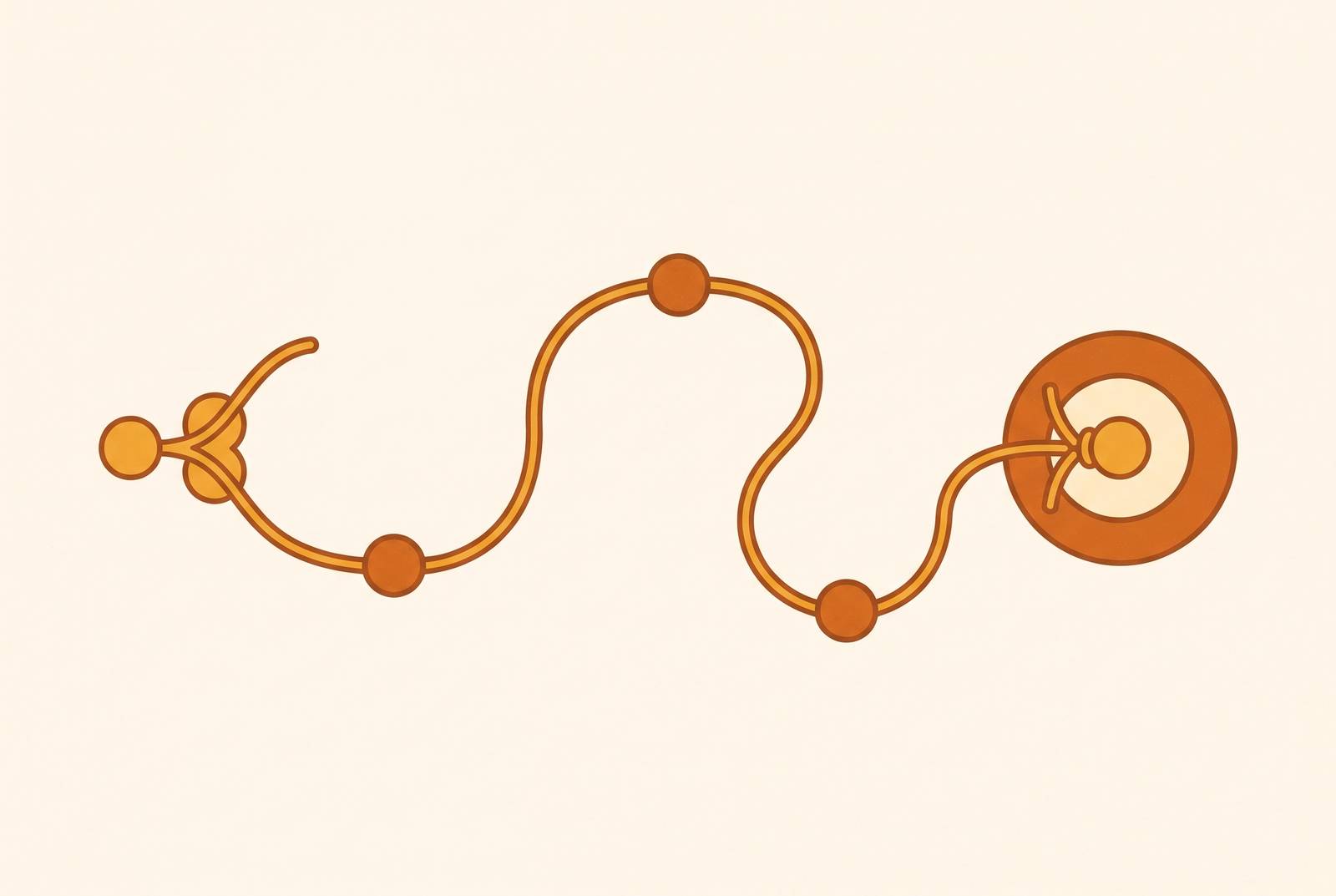
A decision log and a decision trail are not the same object, even though they get treated as interchangeable. A log is a list of outcomes: decision made, date, owner. A trail is a connected record that links the context that produced the decision to the reasoning that justified it to the commitments it generated to the consequence that eventually followed. The log tells you what happened. The trail tells you why it worked and lets you check the reasoning.
Four things have to be in that trail for it to function. First, the decision itself: what got chosen, and just as important, what got explicitly ruled out. Second, the context at the moment of decision: the constraints, the data available, the assumptions everyone was operating under, and the deadline pressure that made one option look better than another. Third, the rationale: the actual reasoning, not just the headline conclusion. Fourth, the commitments: who owns what, by when, and what got promised to whom.
Of the four, rationale is the one that disappears fastest. It is almost never written down because it feels obvious in the room, making it the first thing forgotten and the most valuable thing to have 18 months later.
The commitment layer fails for a different reason. Most tools and processes do manage to capture the action item, the task, the ticket. What dissolves at the handoff is the link back to the decision that generated the task and the person who committed to it. A trail is also incomplete if it skips the rejected alternatives. Organizational memory research frames this as a three-phase problem: knowledge has to survive acquisition, storage, and retrieval, and it can be lost at any one of the three. A trail is only as strong as its weakest phase, and for most teams that phase is storage, because nothing captured in the room ever gets structured enough to retrieve later. The trail isn't a document sitting in a folder. It's a structure, built so that someone who wasn't in the room, possibly years later, can still query it and get an answer.
Where decisions live: why meetings are the right place to start
Most of the decisions that actually matter in a long project don't get made in a shared doc or a Slack thread or an email chain. They get made, or at minimum ratified, in meetings. The average professional spends 31 hours a month in meetings, Atlassian research shows, and across a multi-year project that volume of hours is where the organization's decision history is being written in real time, whether anyone treats it that way or not.
Meetings produce a richness of context that no downstream artifact captures. The rationale gets spoken aloud. Alternatives get raised and rejected in the room, in front of witnesses. Commitments get made by named people, out loud, with other named people watching. None of that survives into a meeting invite or a one-line follow-up email subject. It either gets captured at the source, or it evaporates.
And it does evaporate, unless something structural is in place to stop it. Knowledge generated in a meeting only becomes organizational memory once a persistent layer connects it across time and surfaces it again later. Absent that layer, every meeting is its own island, disconnected from the one before it and the one after. This is exactly why AI meeting capture functions as the intake mechanism for the entire decision trail, the first point where spoken context has a chance to become a structured, retrievable record. It isn't a nice-to-have for people who hate typing during calls.
But intake isn't the same as connection. Modern AI capture tools do a specific, bounded set of things well, and the boundary is this. They transcribe with speaker identification, extract action items, generate summaries, and flag moments that look like decisions. What they do not do automatically is link this meeting's decision to the outcome of the next meeting, or to a CRM entry that gets updated three weeks later, or to a ticket that gets quietly closed with no explanation attached. Capture is necessary. It just isn't sufficient on its own, and the gap between the two is where most of the real work of building a trail actually happens.
How AI meeting tools capture decisions today
The mechanics of a modern AI notetaker are fairly standardized at this point. The tool joins or otherwise captures the call, transcribes it with speakers identified individually, generates a summary, extracts action items, and syncs the result to whatever downstream platforms the team uses. A six-week review spanning more than fifty meetings found hands-on testing across a range of tools showed 90–95%+ accuracy in English as the baseline for transcription, which used to be the hard problem Simular — Best AI Meeting Note Takers in 2026: Hands-On Review of 8 Tools.
What these tools are genuinely good at goes beyond raw transcription. They flag moments in a conversation that look like decisions. They attribute specific statements to specific speakers, which matters enormously for tracking who committed to what. They produce structured summaries that separate decision from discussion, rather than handing back an undifferentiated wall of text. And they push action items directly into the tools where work actually happens: Asana, Linear, Jira, HubSpot, Salesforce, or Slack.
Where they still fall short is structural. They capture the decision as a fact but rarely extract the reasoning trail that produced it, since summary quality varies tool to tool and rationale in particular is hard to isolate from surrounding discussion. They don't, by default, connect this meeting's decision to an earlier meeting where the same question was raised and half-answered. Each capture remains its own island unless something else is layered on top. Hallucination is also a real and acknowledged risk across the category: AI notetakers can misrepresent what was actually said, a failure mode documented widely enough to appear in general reference coverage of the category, citing reporting from outlets including Bloomberg. And even when action items land cleanly in a project tool, the link back to the decision that generated the task, and the reasoning behind it, tends to get lost exactly at that handoff.
What separates the tools pulling ahead in 2026 is that the tool connects meeting content to email threads, CRM records, and searchable history across multiple meetings, rather than raw transcript quality, per Read AI's guide. Connecting content and context across meetings and channels is the actual differentiator, and it turns a good notetaker into something closer to a real decision trail, rather than a well-organized transcript.
Building the trace from decision moment to consequence: a practical structure
The goal is a trace that a future team member can follow backward, from "why is this built this way?" all the way to the specific meeting where the call got made, who committed to what, what constraints were in play, and what happened afterward. Building it takes four deliberate steps, and none of them require exotic tooling.
Step one is capturing the decision at the source, with structure baked in from the start. That means using a notetaker with reliable speaker identification, so commitments get attributed to a person rather than floating anonymously in a summary. It also means training meeting leads to name decisions out loud as they happen: "we're deciding X; the alternative we considered was Y" is a sentence an AI system can extract cleanly, while an assumed, unspoken rationale is not.
Step two is attaching the decision to the artifact it actually governs. A decision summary sitting in a notes archive somewhere is nearly as useless as no summary at all. It needs to route to the specific project record, ticket, or CRM entry it affects. Meeting automation tools already support this kind of routing into Asana, Jira, Linear, HubSpot, and Salesforce, so the decision lives where the work lives instead of in a folder nobody checks. The link has to run both directions, too: from the ticket back to the meeting where the call got made, not just a note bolted onto the ticket after the fact.
Step three is threading decisions across meetings over time. Tools that index a team's full meeting history let someone surface every past instance a topic got discussed, decided, or revisited, and cross-meeting search is emerging as the real differentiating feature in the space. This is also where the Model Context Protocol, or MCP, earns its relevance: an AI assistant with access to a full meeting library can answer a question like "what did the team decide about pricing in the first quarter, and why?" without anyone having manually maintained a decision log. MCP is an open standard for connecting AI applications to outside systems, released by Anthropic in November 2024, with the current specification shipping in July 2026 and production use already running at companies including AWS, Google Cloud, Microsoft, Cloudflare, Figma, Netlify, Supabase, and Xero. In practice, that means an AI application can search a meeting library and pull the relevant transcript without a human ever opening the original recording. Teams that expose their meeting data this way, through MCP or comparable open APIs, are effectively piping decision context directly into the tools where the next decision will get made, closing a loop that used to be entirely one-directional.
Step four is the one most teams skip: capturing the consequence, not just the action item. When a task closes, the outcome needs to log back to the decision that generated it. Did the commitment actually hold? Did the result match the rationale that justified it in the first place? Skipping this step is what turns a trail into a one-way record, useful for explaining a decision but useless for judging whether it worked. None of this demands custom-built infrastructure. It demands choosing tools that support the chain of connections, from meeting capture to project artifact to cross-meeting search to AI retrieval, and applying consistent naming and routing discipline across all of it.
How organizational memory systems make the trail retrievable at scale
A trail earns its keep when someone who wasn't in the room can retrieve it, and that someone is usually a new hire, a team member joining a project midstream, or a leader inheriting a project that's changed hands. This is not a small tax. New hires in knowledge-intensive roles take 8–12 months to reach full productivity, largely because they are reconstructing what predecessors already knew. Early adopters of organizational memory systems report cutting onboarding time by 25 to 40 percent Laxis — State of Meeting Note-Taking 2026 coworker.ai.
The more advanced implementations don't just wait to be asked a question. They surface relevant context proactively, inside the workflow where it's needed. If an engineering team starts discussing a feature that was tried and abandoned a year and a half earlier, a system built this way surfaces the original decision rationale and the post-mortem in real time, before anyone wastes a sprint rediscovering why it didn't work the first time. An archive answers a question once someone thinks to ask it. A live memory layer heads off the wrong question before it gets asked.
Getting there requires a few specific properties from the underlying meeting data. Capture has to be consistent across the whole life of the project, not just at milestones when someone remembers it matters. The data has to be structured enough to index, meaning decisions, owners, dates, and linked artifacts, rather than raw transcript alone. And it has to connect to the rest of the organization's records, so a single query about a product decision surfaces the meeting, the ticket, the CRM note, and the follow-up email together, in one thread. The organizational memory category itself is still emerging, but enterprise CIOs are already ranking institutional knowledge retention among their top AI investment priorities, which is accelerating demand for exactly this kind of infrastructure.
The consent, privacy, and trust conditions that make decision trails legitimate
None of this should be built on a foundation participants didn't actually agree to. A decision trail built from recordings people didn't meaningfully consent to raises legal and compliance exposure that can surface at the worst possible moment, turning the organizational asset into a liability. AI notetakers raise real legal and compliance questions: recordings and generated transcripts can implicate participant notice and consent, data retention policy, vendor access to sensitive material, biometric data, confidentiality, and in some settings attorney-client privilege.
The choice between a visible recording bot and silent desktop capture matters well beyond user experience. A visible bot functions as a consent signal: everyone in the meeting can see that a durable record is being made, which is often the right default for internal project meetings where building that record is the explicit point. Silent capture is invisible to other participants, which may suit certain narrow contexts but is never appropriate without clear disclosure. This determines whether the resulting record is legally defensible and whether the people who generated it trust it enough to use it.
Retention policy deserves its own scrutiny in long-running projects specifically. A trail is only useful if the underlying recordings and notes survive for the full life of the project, and plenty of standard or free-tier plans cap or delete data on a timeline well short of a multi-year engagement. Hallucination risk compounds over long projects: a misattributed commitment in a summary that gets cited 12 months later as the basis for a consequential decision is a structural risk, not just an accuracy nuisance. Verification against the original transcript needs to be a standard step before any high-stakes decision leans on a summary. Teams building a trail people can trust should set explicit norms at kickoff, covering who gets recorded, how long data is kept, who has access to it, and what the correction process looks like when a summary gets something wrong. A trail nobody trusts is a trail nobody uses, which defeats the entire premise.
What a project looks like when the trail is working
When the trail holds together, "why did we build it this way?" stops being a rhetorical question that dead-ends in a shrug. It becomes a question with a retrievable answer: who decided, what constraints applied, what alternatives got considered and dropped, and who promised what to whom. That answer doesn't depend on tracking down whoever happens to still remember the meeting.
New team members joining a project mid-stream can reconstruct the decision history without interviewing everyone who was there, reducing the 8–12 month ramp to something significantly shorter. Decisions built on assumptions that have since gone stale become visible rather than invisible, because a system with real cross-meeting memory can flag that a given constraint was cited months ago under conditions that no longer hold.
None of this replaces judgment. A trail doesn't make better decisions on a team's behalf, and it never will.