Repeated Conversations as an Organizational Failure Mode
Organizations waste billions on repeated meetings because they fail to retain what gets decided.
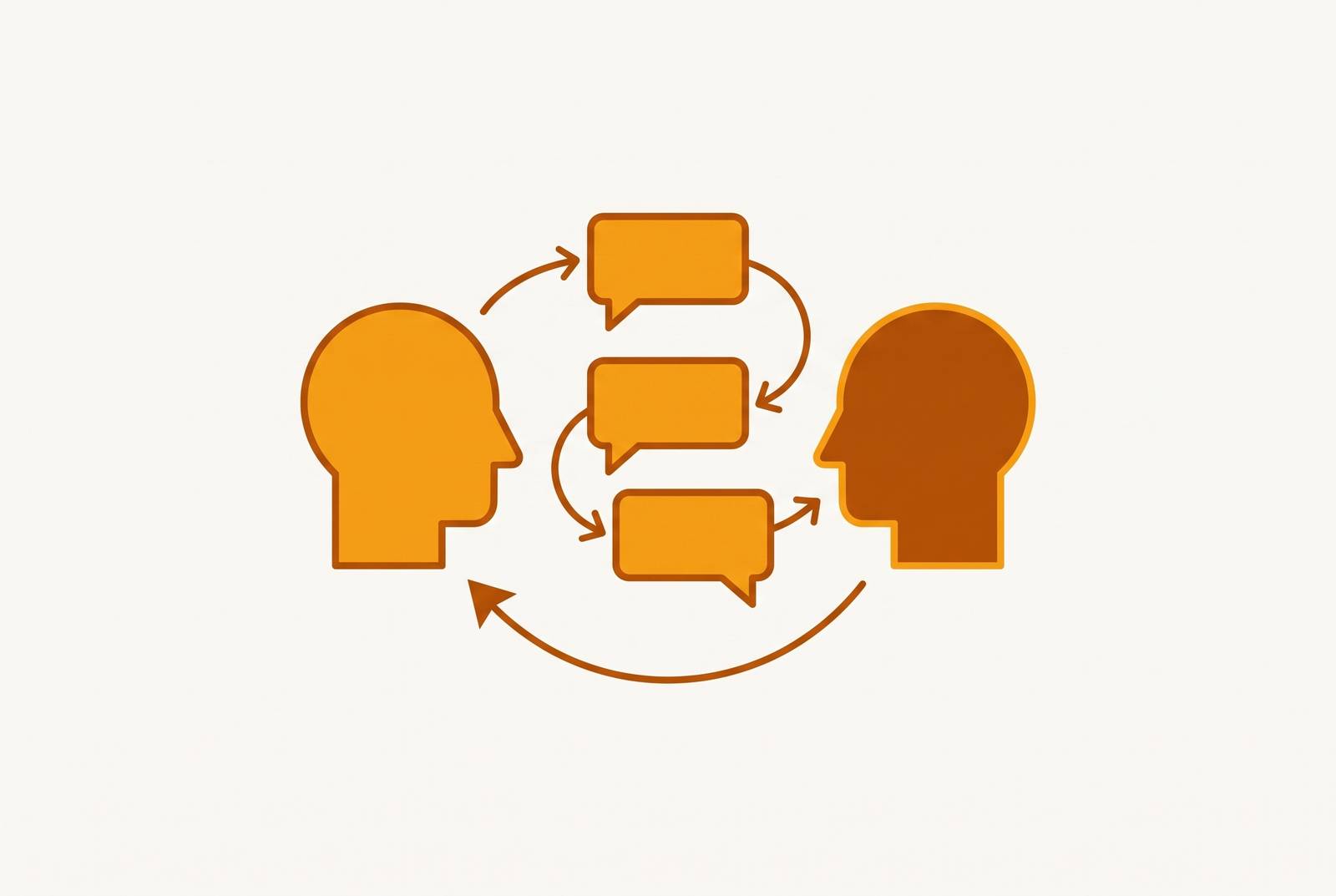
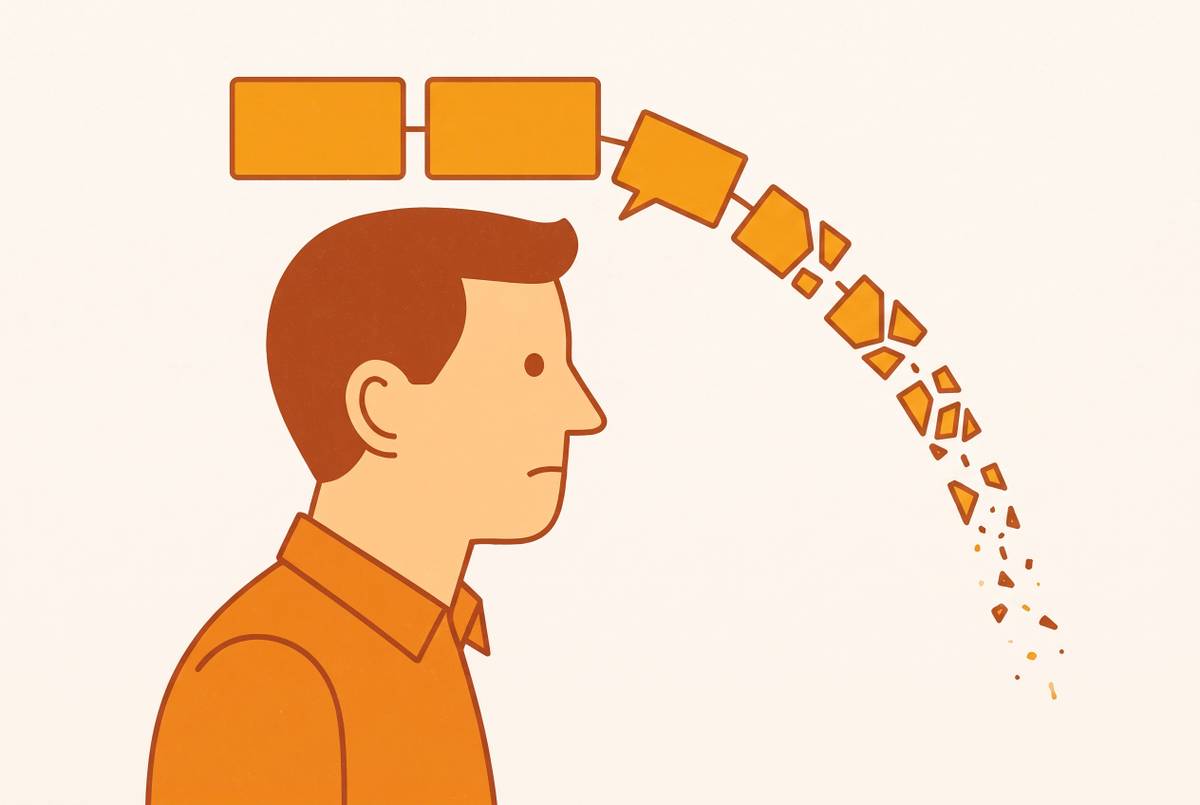
Repeated conversations inside an organization are a symptom, not an accident. They mean the organization has no reliable way to turn what gets said into something that outlasts the meeting itself. A new hire asks a question a departing colleague answered six months earlier. A cross-functional team relitigates a decision nobody wrote down. A customer explains their situation for the second time to a rep with no record of the first call. Each of these looks like a one-off, but together they describe a memory failure, not a meeting failure, and treating one as the other is how the same conversation keeps happening.
Organizational capacity already consumed by this problem
Meetings now produce more input and less output per meeting than they used to. Organizations are scheduling 67% more meetings than they did in 2019, while meeting effectiveness has dropped 32% over the same stretch. Those two lines shouldn't move in opposite directions at once. The fact that they do says something about where the extra volume goes: not toward more decisions, but toward re-covering ground that already got covered.
Fellow.ai puts the cost of unproductive meeting time at $375 billion a year. That figure usually gets filed under "scheduling problem," as if the fix were fewer invites. It's closer to a documentation problem that compounds on itself: the same ground gets covered repeatedly because nothing from the last conversation carried forward into this one. Fellow.ai also found that 92.4% of all meetings have no end date. A recurring meeting with no exit condition is structurally guaranteed to repeat itself, because nothing ever retires the question it was created to answer. Only 11% of meetings get rated highly productive by the people sitting in them, and that gap between how much meeting volume exists and how much of it is worth anything is exactly where repeated conversations live.
The hours carry a cognitive cost too. A 30-minute meeting doesn't cost 30 minutes. It costs 30 minutes plus roughly 23 minutes of recovery time as attention resets. Stacking five scattered meetings into a single day pushes the recovery cost alone to approach two additional hours of degraded capacity, before anyone has done a shred of actual work. The output of one meeting almost never feeds into the next. That's the mechanism driving all of it.
What organizational memory means and why meetings are its primary raw material
Organizational memory is the structured, persistent layer of knowledge that lets a team retain, connect, and apply what it collectively knows, across tools, across time, and across whoever happens to be in the room at a given moment. A document repository is a filing cabinet. Organizational memory is the system that knows what's in the cabinet and why it got put there, and most companies have plenty of the former and almost none of the latter.
Meetings are the source of organizational knowledge, full stop. Decisions get made there. Commitments get named there. Context gets established there, in real time, out loud, and then usually nowhere else. Every downstream artifact, every doc, every roadmap, every customer commitment, traces back to something said in a room or on a call and then, in most organizations, never written down in a form anyone else can find.
Research on knowledge silos describes the resulting failure mode: lengthy onboarding periods just for a new hire to grasp how the business actually operates, plus high costs from repeated trial-and-error on tasks that recur across quarters or years, because historical knowledge never gets reused. Brandon Hall Group research puts new-hire ramp time at enterprise companies at six to twelve months before reaching full productivity. That gap is rarely about skill. It's about access to the context behind past decisions, the history of a project, the knowledge that exists only in a senior employee's head because nobody ever wrote it down. The irony is well recognized: meeting volume has grown sharply while the share of that content that gets retained and reused has not kept pace. Getting information from one person to another got solved years ago. Retaining that information never did.
Why manual note-taking fails to close the gap even when people try
Typing notes during a meeting splits attention the same way checking a phone does. Whoever is writing is also missing the behavioral signals a text transcript never captures anyway: the hesitation before someone answers a hard question, an unguarded aside, a shift in tone that changes what was just said. Research on AI meeting transcription makes this point directly. Those micro-signals carry real meaning, and conventional note-taking strips them out by design, simply because the note-taker's attention is elsewhere.
Even when notes get taken, they're rarely structured, rarely searchable, and rarely routed anywhere useful. They sit in a personal doc, a paper notebook, a Slack message that scrolls out of view within a day. A Fellow.ai survey, cited by livesuggest.ai, found that 84% of users say they change how they speak when an AI note-taker is visibly present. A quieter version of the same dynamic applies to a human taking notes: that person's attention is split, and that person is also the one deciding, consciously or not, what gets written down and what doesn't.
Manual documentation gets worse over time, not better, because it's asymmetric. People who attended the meeting remember selectively. People who didn't attend have no access. That's precisely the condition that produces a repeated conversation the moment personnel changes or a decision needs to cross from one team to another. The pattern has a name: organizational amnesia, the company's collective intelligence leaks out the moment the call ends, no matter how conscientious any individual note-taker tries to be. No amount of individual diligence fixes a structural gap.
How AI meeting capture works and what it produces
Two architectures dominate the market going into 2026. Bot-based tools join the call as a visible participant, announce that recording is happening, process the audio in the cloud, and return a transcript with speakers identified. This works across Zoom, Google Meet, Microsoft Teams, and Webex, though platform-level controls are starting to push back: Teams is rolling out admin policies in 2026 that let organizations block bots outright, and Zoom's waiting-room and domain restrictions can already keep an external bot from getting in.
Device-level capture, sometimes called bot-free, works differently. It pulls system audio straight from the user's own computer. No bot joins the call, so other participants may not know recording is happening unless the user tells them. This approach picked up real momentum through 2026, with at least one major transcription platform adding bot-free capture alongside its existing bot mode in a 2026 update.
Underneath either architecture, two layers of technology stack on top of each other. Automatic speech recognition converts audio into raw text, a word-for-word transcript that's accurate but exhausting to read straight through. A large language model synthesis layer sits above that, interpreting context, pulling out action items, flagging risk, separating actual decisions from the surrounding discussion. This second layer is where a transcript turns into something a person would actually want to read.
Transcription accuracy itself has stopped being a meaningful differentiator, and any evaluation that still leads with it is asking the wrong question. A hands-on review by Simular.ai tested more than fifty real meetings across the leading tools and found all of them landing in the 90 to 95%+ accuracy range for English. The real gap sits in what happens to the text after it's produced: action items must be separated from general discussion, decisions must be flagged, and commitments must surface clearly enough that someone who wasn't in the room can tell what happened and what's supposed to happen next. The choice between bot and device-level capture matters for more than convenience too, since it shapes who even knows a conversation is being recorded, a consent question that deserves its own scrutiny further down.
Where most tools stop and why stopping there perpetuates the failure to retain memory
Most AI meeting tools produce an accurate summary and then park it in a folder. The content gets captured. It just never connects to anything else. Read.ai's 2026 assessment of the category puts it bluntly: transcription is table stakes now, and what matters is whether tools link meeting content to email threads, CRM records, and search across other meetings. A standalone transcript, however accurate, is just a nicer filing cabinet.
This failure appears most clearly at the handoff between sales and customer success. When a success rep re-asks a question the sales rep already covered on an earlier call, that is proof that no shared memory exists across the pipeline. It's proof that no shared memory exists across the pipeline. Industry analysis of AI meeting summarizers flags this directly: the conversation was recorded somewhere, but it never traveled to where it was needed next.
The cost angle gets missed too, and it shouldn't. Research from emasterlabs.com on AI tools for sales meetings puts manual post-meeting admin, writing notes, updating a CRM, drafting a follow-up, at around 45 minutes per call without automation. Good automation compresses that to under five minutes, and the tool still needs to route the output somewhere for that gain to matter. A transcript of a meeting nobody remembers isn't organizational memory. Memory requires the output to be searchable, connected to related context, and delivered to wherever the next relevant conversation is about to start. Stopping short of that is the norm, not the exception, and it's why most teams that adopt an AI notetaker still find themselves repeating the same conversations a year later.
What meeting output looks like when treated as structured organizational context
A useful line can be drawn here. A knowledge base is static: a shelf of documents someone has to remember to update. Organizational memory continuously learns from interactions, decisions, and outcomes instead. It functions as a living record of how the organization actually runs, not an archive of how it used to.
Workflow automation is the connective tissue that makes this real. Meeting output routes straight into the systems where the work actually happens: CRM entries update without anyone typing them in, action items land in a project tracker, decisions get logged in a shared doc, follow-ups draft themselves in a chat thread. The output persists in context, instead of sitting in isolation waiting for someone to remember it exists.
Cross-meeting search is what actually turns a pile of individual meeting records into something that qualifies as memory. Finding what was said in one specific call is a much narrower task than finding everything the organization has ever said about a given topic, including the decision from three months back that quietly explains today's constraint. This is where onboarding actually shortens: a new hire with searchable meeting history gets more than documents. They get the reasoning behind decisions, which is the part of the multi-month ramp that usually takes longest to rebuild from scratch.
An emerging layer, described in Tana's research on real-time agents, pushes this further: agents that file issues, draft documents, and prepare follow-ups during or immediately after a call, offered as proposals a person approves rather than tasks someone has to remember to do later. The workflow fires before the meeting even ends.
Shopify eliminated 12,000 recurring meetings in January 2023, a move projected to save 322,000 hours annually. Recurring meetings are frequently a symptom of missing memory: once context actually persists somewhere reliable, the meeting whose only job was to re-establish that context stops being necessary. MIT CISR research from Dery and Sebastian backs this up from a different angle. Cutting meeting volume by 40% raised self-reported productivity by 71%, employee satisfaction by 52%, and cut stress by 57%, with no measurable drop in collaboration quality. The lever was never attendance. It was whether context survived between conversations.
The consent and visibility considerations that shape how meeting capture gets deployed
Wikipedia's framing of AI notetaker ethics covers recording without consent, the risk of hallucinated summaries, the privacy and security of meeting data, and legal questions around notice, retention, vendor access, biometric data, confidentiality, and in some cases attorney-client privilege. None of this is hypothetical, tacked onto the technology after the fact. It's built into how the technology works. It has to be handled at the policy level, not left to whoever happens to be running the call that day.
Bot-based tools make recording visible by design. The bot's presence in the call functions as its own consent signal, since everyone can see it's there. Device-level tools remove that visibility, and with it the built-in consent mechanism, which shifts the entire obligation onto the person doing the recording to disclose it themselves. The Fellow.ai figure on users changing how they speak around a visible AI note-taker cuts both ways here: bot presence changes the conversation, but removing the bot doesn't remove the underlying obligation to disclose recording. It just moves who's responsible for answering it.
The right choice isn't universal, and pretending otherwise is where most policy documents on this go wrong. Internal recurring team meetings tend to work fine with bot-based capture, since consent is generally established at the policy level ahead of time. External client calls, HR conversations, and executive sessions call for more care, whether that means device-level capture or explicit disclosure before the call starts. Sales discovery calls sit in a gray zone: a visible bot can read as professional polish in one industry and as friction in another, depending entirely on the relationship.
Data retention design matters as much as consent design, and it deserves more scrutiny than it usually gets. Some tools delete the raw audio immediately after transcription and never retain the original recording at all, which resolves an entire category of data risk simply by not keeping the source material around. That's a deliberate architectural choice, not a default, and it's worth checking for by name rather than assuming a vendor does it.
None of this should get decided call by call, by individual judgment. What gets recorded, who can access it, how long it's retained, and what happens when someone objects: these are organizational policy questions, not personal ones. Privacy and security in this category are the condition under which anyone reasonably agrees to have a sensitive conversation captured in the first place, not features bolted on after the fact.
How to evaluate AI meeting tools on the dimension that matters: what happens after the notes
The best meeting tool available in 2026 turns notes into action and connects them to wherever that context gets needed next. That's the argument Simular.ai's review lands on after testing the field, and it's the right one. Transcription accuracy is the floor, not the ceiling: every leading tool clears 90 to 95%+ in English under Simular.ai's hands-on review, so competing on that number alone doesn't tell a buyer much anymore.
Four questions actually separate the tools worth using from the ones that just produce a nicer document. Whether the output stays inside the tool's own interface, or routes out to the CRM, the project tracker, the chat tool, wherever the work actually happens, matters most of all. Whether search runs across meetings or only within one matters almost as much: a tool that searches every past conversation is building something closer to organizational memory, while a tool that only summarizes a single call at a time is not, no matter how good that one summary reads. How much post-meeting admin actually disappears is worth checking directly too, since the drop from 45 minutes to under 5 only happens if automation runs on its own, so ask what fires automatically versus what still needs a manual trigger. And the consent and data posture needs a straight answer: bot or device-level, how long audio gets retained, what compliance framework applies, who has access to what's stored.
The category breaks into rough segments by function. Transcription-first tools are built for team collaboration and CRM integration, with free tiers capped at a limited number of minutes per month and paid tiers running from around $10 per seat monthly up to a noticeably higher ceiling; most of these are bot-based. Privacy-first, botless tools prioritize discretion and lighter-touch capture, often with a free tier limited by note count or summary count and paid plans landing around $14 to $19 per user monthly, though automation beyond the summary itself tends to be thinner here. A third category, built around cross-platform intelligence, is the one actually aligned with the argument running through this piece: the value was never in the transcript. It's in whether the organization can find, connect, and act on what was said, long after the call has ended.