Organizational Amnesia After Employee Departure
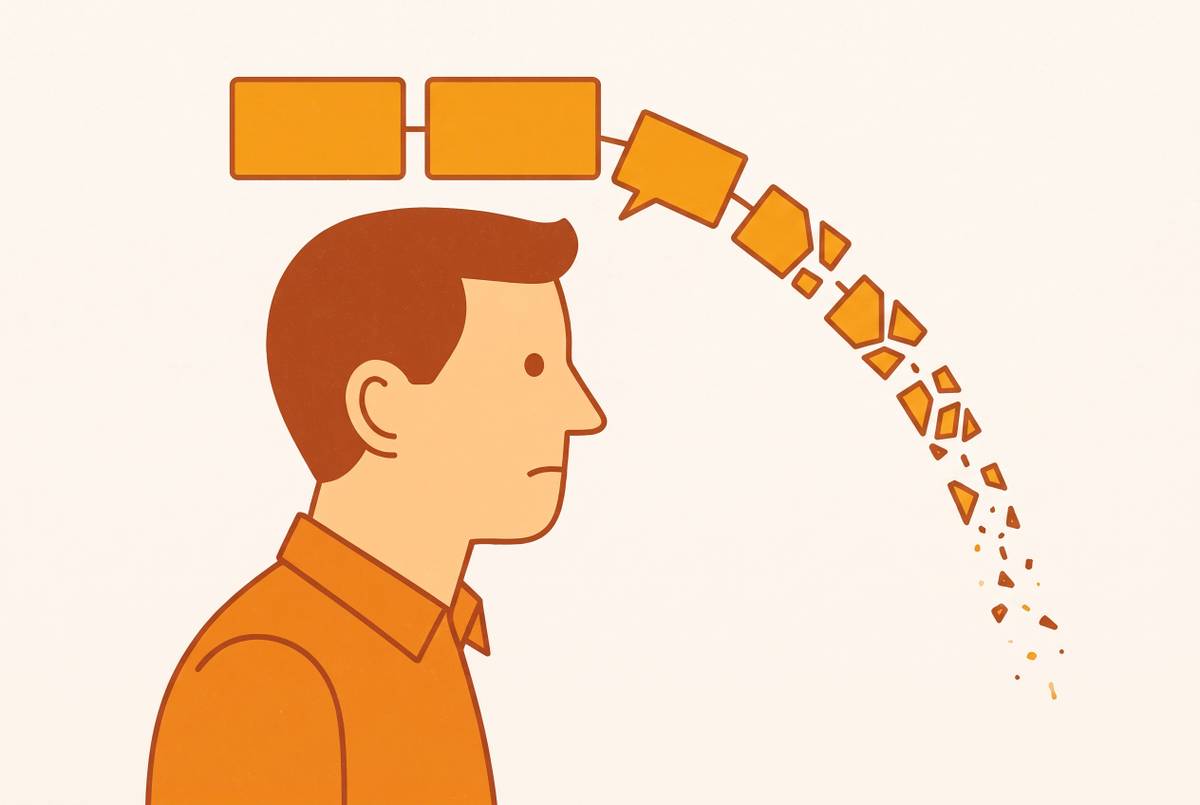
Most of what employees know never gets documented before they leave.
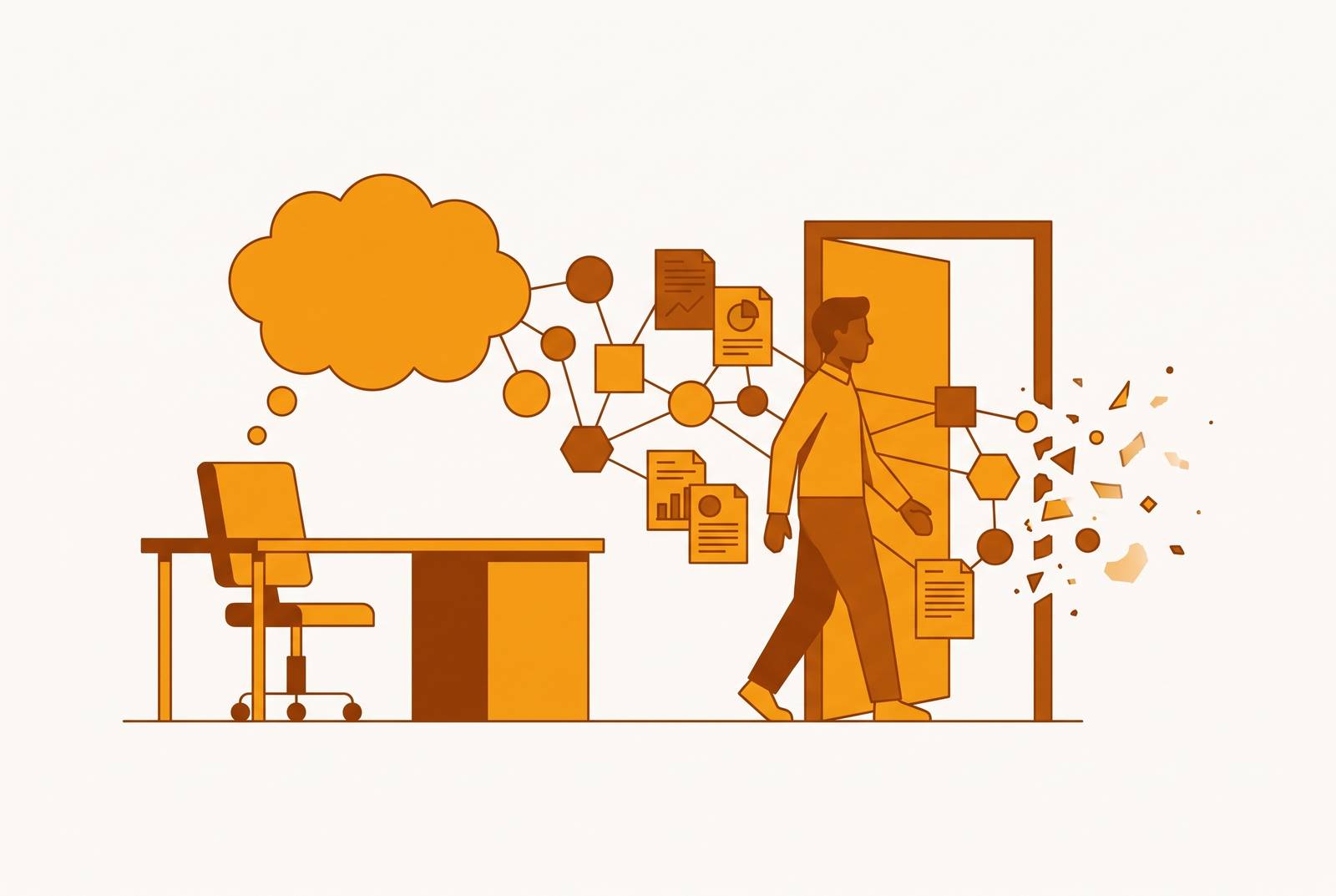
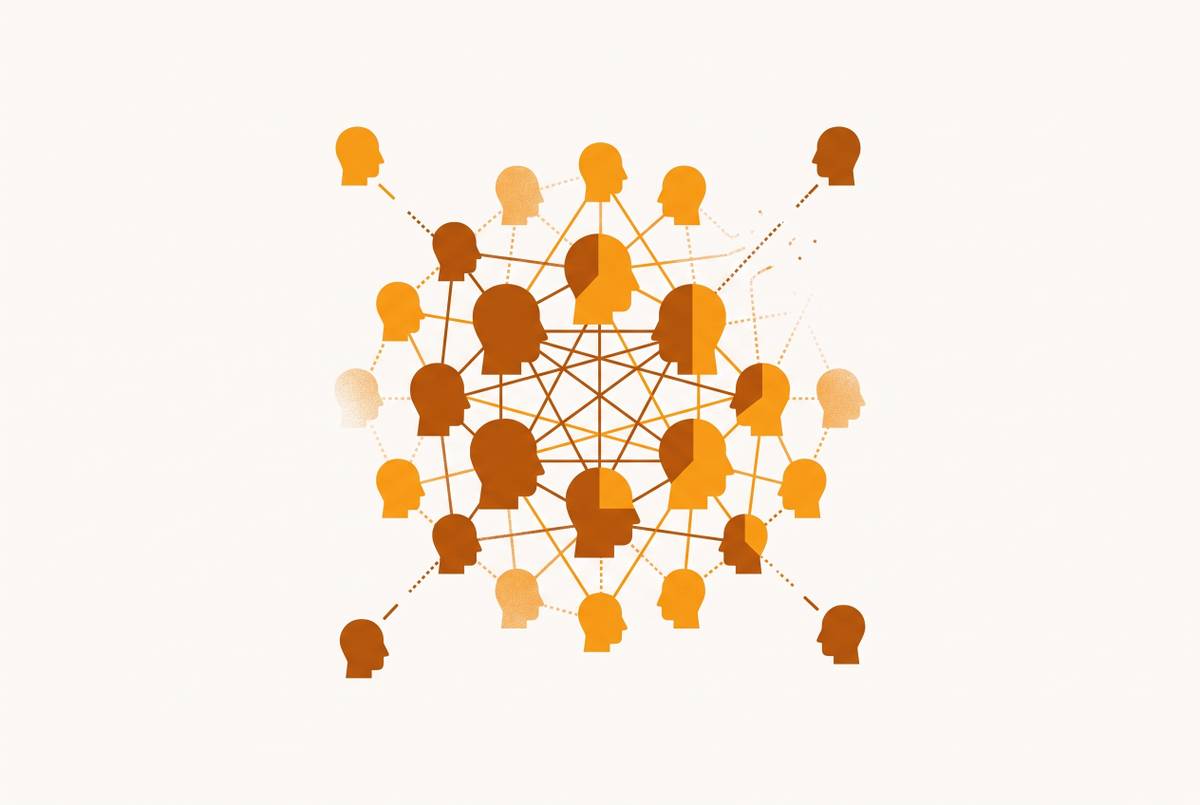
Organizational amnesia after an employee leaves is a documentation problem that predates the departure by months or years. It's a documentation problem that predates the departure by months or years, because most of what a departing employee knows never gets written down while they're still around to write it. The exit interview, the transition memo, the two weeks of frantic handoff meetings can't capture knowledge that was never written down while the employee was still around. Researchers who study this have names for it, and the names signal that the problem has a formal literature behind it rather than being a vague HR anxiety.
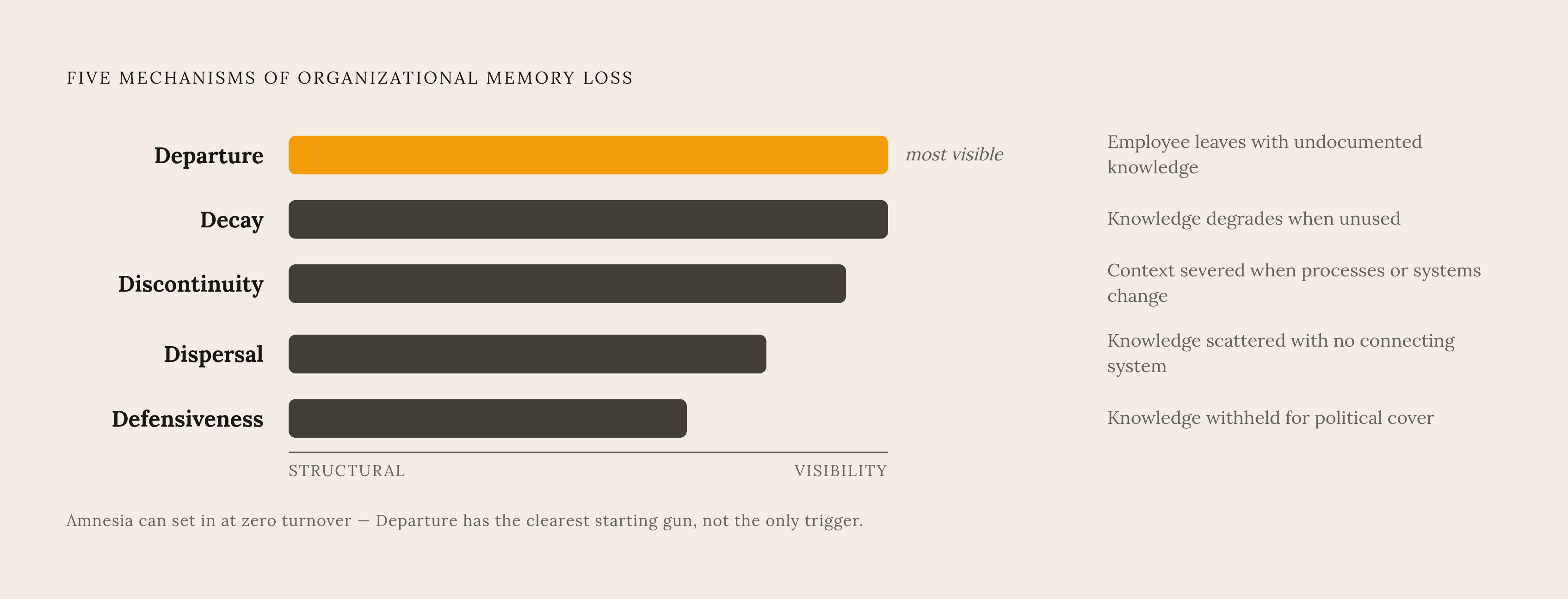
Organizational behavior scholars call it "organizational Alzheimer's." Some call it "enterprise dementia." The more clinical term, used across management research, is "corporate" or "institutional amnesia." All three point at the same definition: organizational memory is the sum of everything a company knows, plus the processes by which that knowledge gets acquired, stored, and retrieved by the people inside it. When those processes break, the knowledge doesn't disappear all at once. It erodes through five distinct mechanisms, and departure, an employee walking out the door, is only the most visible one.
Decay is knowledge degrading on its own, even when nobody leaves, simply because it isn't used or refreshed. Dispersal is knowledge scattered across a dozen people with no system connecting what any one of them knows to what the others know. Defensiveness is knowledge deliberately withheld, held close for political cover or job security. Discontinuity happens when a company swaps out a process or a system and severs the thread connecting current work to the context that came before it. A resignation letter, a two-week notice, a last day on the calendar: departure is simply the mechanism with the clearest starting gun. That's precisely what makes it worth studying on its own, and precisely why it would be a mistake to treat it as the only mechanism that matters. Amnesia can set in at zero turnover. The failure is structural.
Why knowledge that lives only in people's heads never makes it into documents
Knowing what someone did is not the same as knowing how they did it, why they chose that method over the alternatives, or what they learned the three times it went wrong before it went right. Most documentation efforts capture the first category and quietly abandon the second, third, and fourth, and those are the categories that actually carry the value.
Client and partner relationships are the clearest case. A CRM entry logs a contact's name, title, and last call date. It does not log that this particular contact hates being phoned without warning, or that the account has a bruised history from a vendor dispute three years back that still colors every negotiation. Process knowledge carries the same gap: the documented steps describe the happy path, but the workaround for the one system that fails every other Tuesday, or the exception that only comes up twice a year during year-end close, lives nowhere but in someone's memory. Decision-making context disappears just as fast: a choice gets recorded, but the reasoning behind it, the alternatives that were weighed and rejected, evaporate the moment the meeting ends. Cultural norms, the unwritten rules about how work actually gets done versus how the org chart says it gets done, are almost never written anywhere on purpose. And lessons learned from past failures, arguably the most expensive knowledge a company owns, tend to live only in the memory of whoever survived the failure.
None of this is anecdotal. Survey data on HR professionals shows the documentation gap is close to universal: 69% of organizations don't formally document cultural norms, 64% don't document client or partner relationships, 61% don't document industry knowledge, and 53% don't document knowledge about internal tools and systems. These are the categories organizations report as hardest to rebuild once a tenured employee is gone. They're the categories organizations report as hardest to rebuild once a tenured employee is gone: 43% of respondents in that same research called client and partner relationship knowledge difficult or very difficult to reconstruct, and 39% pointed to internal tools and systems. The gap is worst precisely where the cost of the gap is highest.
The measurable cost of knowledge that walks out the door
The scale of the underlying churn makes this a chronic condition, not an occasional inconvenience. A national labor statistics agency reported that 3.1 million employees voluntarily left their jobs in August 2025 alone. Multiplying that by every category of undocumented knowledge above turns the departure mechanism into a constant, rolling drain rather than a rare event triggering isolated crises. It's a constant, rolling drain.
The financial cost is well documented, if inconsistently priced. Research from Applauz puts the cost of replacing a single employee somewhere between 50% and four times that person's annual salary, depending on the role and the experience level involved. Layer in the productivity ramp: a new hire typically takes six to twelve months to reach full output, and that's before counting the weeks or months the seat may sit empty during a search. Adding it up, a single departure in a senior or specialized role can cost an organization close to a full year of below-capacity output from that position. At the sector level, a study from IDC found that companies lose $31.5 billion annually to poor knowledge sharing. That figure is about the general failure to move knowledge from where it exists to where it's needed, and departure is simply the sharpest edge of that broader failure. It's about the general failure to move knowledge from where it exists to where it's needed, and departure is simply the sharpest edge of that broader failure.
Why standard offboarding documentation fails to capture what matters
The default response to an impending departure is familiar: ask the employee to write a transition document, hand over account credentials, list out their recurring responsibilities. It is, at best, a partial fix, because it captures the explicit and skips the tacit.
A process document describes what happens when everything goes according to plan. Experienced employees carry a second layer of knowledge that never makes it onto paper: what happens when the plan breaks. The workaround for the exception case. The client who needs a phone call instead of an email. The step that looks skippable but isn't, for reasons that made sense in a meeting two years ago and were never written down since. Asking someone to document their job in the final two weeks catches the surface. It rarely catches the judgment underneath it.
Timing compounds the problem. The window in which an organization can realistically prevent departure-driven knowledge loss is narrow, running only a short period on either side of the resignation date, before and after. Outside that window, the pattern in the literature is consistent: the knowledge is gone, and no amount of after-the-fact interviewing brings it back.
A better model than the panicked final-week handoff is a structured transfer spanning roughly 90 days, run as a phased countdown instead of a scramble. The first 30 days go toward identifying and documenting the roughly 20% of know-how that accounts for 80% of the role's actual value, the concentrated slice that matters most. The remaining weeks build in hands-on shadowing and guided practice, so gaps in the handoff appear while the expert is still reachable, not three weeks after they've started a new job. This approach beats unstructured offboarding by a wide margin. It still depends, though, on the departing employee's willingness to cooperate, their availability during a period when they're often mentally checked out, and on someone else in the room knowing which questions to ask. Structure alone doesn't solve a knowing-what-to-ask problem.
Where the knowledge lives: meetings as the primary site of organizational memory
None of this changes where the knowledge was actually created to begin with. The average professional spends 31 hours a month in meetings, and meetings are not the peripheral, box-checking activity they're often treated as. They are the primary site where decisions get made, commitments get spoken aloud, and context gets explained by the person who understands it to the person who doesn't yet.
Consider what actually happens inside a meeting that never makes it into any system afterward. The reasoning behind a decision gets discussed out loud, but only the decision itself gets written down, if that. A customer's concern gets voiced informally, half a complaint, before it ever becomes a formal ticket. A senior employee walks a junior one through a judgment call, explaining the "why" in real time, with nothing capturing that explanation once the call ends. An alternative gets floated, argued over, and rejected, and the reasoning for rejecting it disappears the moment the next agenda item starts. A commitment gets made to a client on a call and never gets logged anywhere a CRM would recognize.
The forgetting happens fast. Research on meeting recall indicates that participants forget a large share of meeting content within 24 hours. The knowledge is generated in the room and starts evaporating almost immediately afterward; whatever doesn't make it into a note within a day is functionally gone. Faithfully transcribing entire meetings by hand rarely happens in practice, and notes for the meetings that matter most tend to get lost, written down incompletely, or buried in a digital folder structure nobody can search effectively later. The knowledge was never really "in" the departing employee's head alone, and that is the structural failure that produces all the offboarding statistics above. It passed through dozens of meetings on its way there, and the organization had no system for catching it as it passed through.
AI meeting tools that turn conversations into searchable organizational memory
AI meeting assistants exist specifically to intercept that evaporation point. At a functional level, the pattern is consistent across the category: the tool joins or otherwise captures the call, transcribes it in real time with speaker identification attached to each line, generates a summary and a set of highlights once the meeting ends, extracts action items from the discussion, and syncs with whatever platform hosted the call, whether that's Zoom, Google Meet, or Microsoft Teams.
A combination of generative AI and natural language processing produces that functionality. NLP handles the transcription and the structural parsing of who said what; large language models then read that transcript and pull out the decisions, the action items, and the topics that mattered, in something closer to the way a careful human note-taker would summarize a call rather than a mechanical keyword search.
The technical bar has risen enough that speed and accuracy are no longer where vendors differentiate. The strongest tools now transcribe with very low latency, fast enough that a transcript reads along with the conversation in real time rather than lagging behind it, and accuracy across the leading tools runs in the 90 to 95%+ range for meetings conducted in one widely used language. That level of accuracy is table stakes at this point, not a selling point. What matters is what happens to the text after it's generated: an organization either retains knowledge or just accumulates transcripts depending on that.
From captured meetings to living organizational knowledge: search, routing, and workflow integration
A transcript sitting in a folder is an archive, and archives that can't be searched functionally don't exist for the person who needs them six months later. It's an archive, and archives that can't be searched functionally don't exist for the person who needs them six months later. The real test of an AI meeting tool is this: six months on, can someone find the exact moment a customer said they were unhappy with onboarding, without remembering which call it was or scrolling through a list of file names guessing. It's whether, six months on, someone can find the exact moment a customer said they were unhappy with onboarding, without remembering which call it was or scrolling through a list of file names guessing.
Tools built with full-archive search solve that specific problem: a query like "find every call where a customer mentioned onboarding problems" returns exact timestamps across months of recordings. A searchable knowledge base returns exact timestamps across months of recordings, while a filing cabinet requires someone to re-watch meetings to confirm what was said.
Even that isn't the finish line. Action item extraction has become close to universal across the category; every serious tool can find the tasks buried in a conversation. What actually separates products is whether those extracted items turn into filed work, an issue automatically opened in Linear or GitHub, a document drafted from the discussion, a follow-up email actually sent, or instead remain a static bullet list that still requires a human being to translate into action. A list of action items nobody actioned is just a more organized way of losing the same knowledge.
Routing is where this connects back directly to why people leave. When client commitments, stated preferences, and relationship context get logged automatically into a CRM the moment they're said out loud, the next person who touches that account inherits the history instead of having to reconstruct it from memory, which is the direct structural counter to the "client hates surprise phone calls" scenario that no departing employee ever thinks to write down. When decisions and action items route automatically into project tools like Linear, Asana, or GitHub with the meeting context attached, the reasoning behind a task travels with the task itself, instead of surviving only in the head of whoever was in the room. And when meeting summaries route into Slack or similar channels, teams who weren't on the call get the decision and its context without needing a separate recap meeting to reconstruct what already happened once.
None of this eliminates the five mechanisms of organizational amnesia. Decay, dispersal, defensiveness, and discontinuity are cultural and procedural problems that no transcription tool solves on its own. But departure, the mechanism this piece has focused on, loses much of its power once the knowledge in question was never trapped in one person's head to begin with. It was captured in the room, at the moment it was created, searchable and routed before anyone had reason to think about a two-week notice.