LLM Summarization Quality for Technical and Domain-Specific Meetings
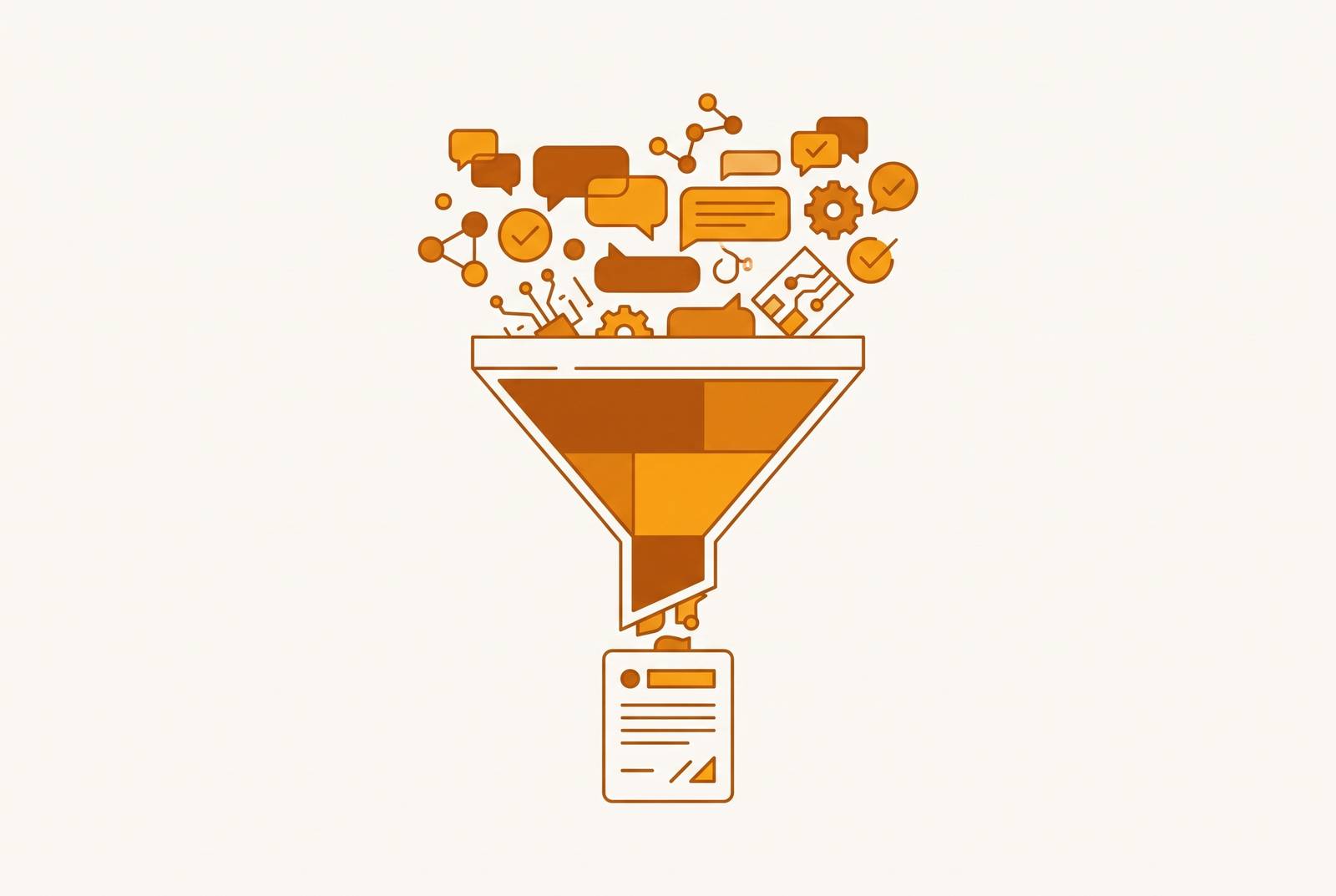
Technical meetings break down at two separate points: when audio becomes text, and when text becomes summary. An error introduced at the first stage does not stay contained there. It becomes the raw material the second stage works from, and the second stage has no way to tell a corrupted input from a clean one. This failure rate is worse than either stage would produce on its own, and it appears most in exactly the meetings where accuracy matters most: architecture reviews, sprint retrospectives, incident post-mortems.
The two-stage pipeline's compounding failure in technical meetings
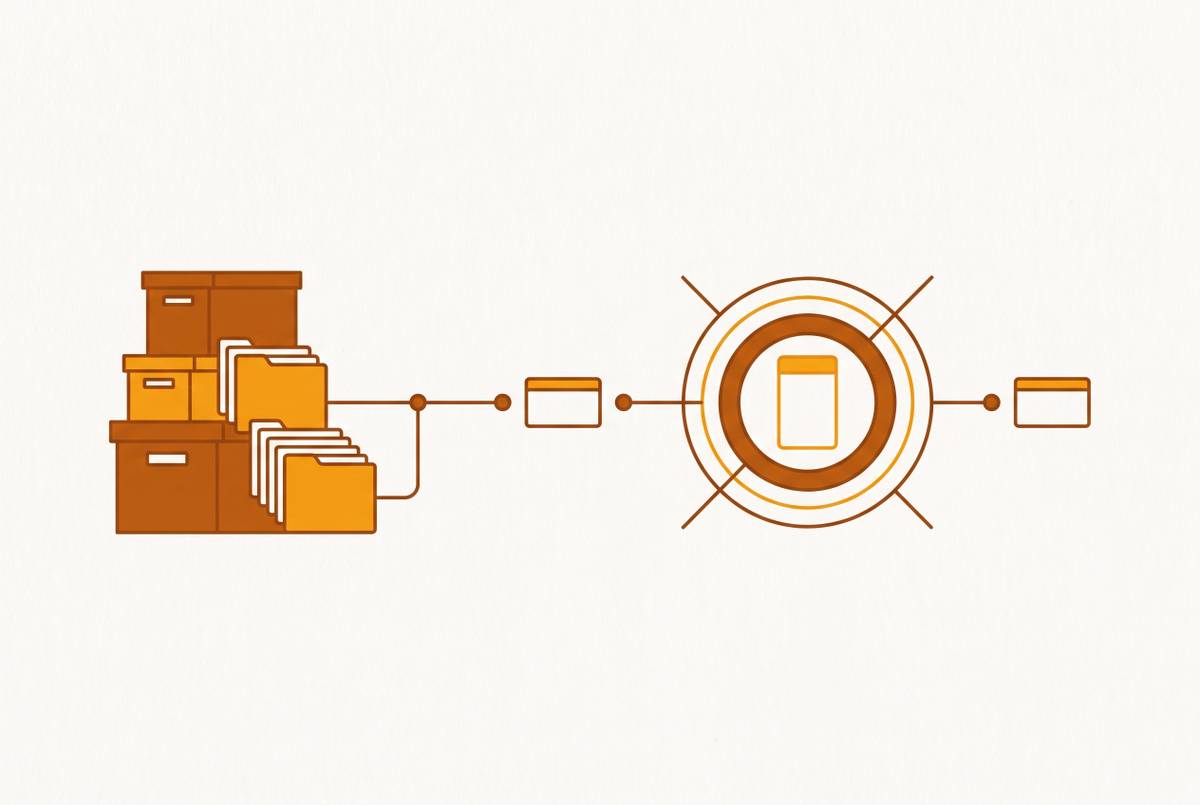
The mechanics are simple to state. Audio becomes a transcript. The transcript becomes a summary. A model never hears the meeting itself. It reads the transcript and treats it as ground truth. Any word the transcription stage got wrong, any speaker it mislabeled, any action item it garbled, gets handed to the summarizer as fact. The summarizer cannot go back and listen for the detail the transcript dropped. It can only work with what made it onto the page.
That handoff is where technical meetings diverge from casual calls. A sales call or a one-on-one check-in tolerates a certain amount of transcription noise because the content is forgiving, full of ordinary words with ordinary phonetic patterns. A systems design review is not forgiving in the same way. It runs on product names, acronyms, version numbers, and service identifiers, the kind of vocabulary a general-purpose transcription model has never been trained to expect. When the transcript mangles one of those terms, the summarizer does not know it happened. Feeding that same model a transcript with corrupted technical content compounds the hallucination risk.
This is why technical meeting summarization deserves to be treated as two distinct engineering problems. If you fix the summarizer, the transcript can still be broken, and a fixed transcript doesn't guarantee a faithful summary. Each stage needs its own scrutiny, because the way a stage fails depends on its domain.
Transcription breakdowns on technical vocabulary ahead of summarization
Transcription errors in technical meetings are not scattered evenly across a conversation. They cluster around the exact words that carry the most weight: product names, system identifiers, API endpoints, the shorthand acronyms a team has built up over years. That clustering is the problem, because it means the words a transcription model is most likely to get wrong are the words a summary most depends on getting right. A missed filler word is harmless. A misheard service name attached to a decision is not.
Several conditions specific to technical meeting formats make this worse. Domain-specific vocabulary is one. None of these conditions are unique to technical meetings, but they appear in technical meetings at a higher rate than in a casual one-on-one or a routine status call.
Some of this is addressable before a single word gets transcribed. Priming a transcription model with the product names, acronyms, and domain terms specific to a team resolves a meaningful share of vocabulary errors without touching the underlying model. Tools like Circleback let you feed in custom vocabulary and work across technical domains, cutting this category of error directly and giving the summarizer downstream a cleaner transcript to start from.
Speaker attribution compounds the difficulty. The summarizer has no independent way to verify who said what. It trusts the transcript's attribution the same way it trusts the transcript's vocabulary, and when that trust is misplaced, the error moves forward unexamined.
Why Standard Summarization Metrics Miss the Errors That Matter
Even a flawless transcript does not guarantee a reliable summary, and the tools most commonly used to check summary quality were not built to catch the failures that matter in technical content. ROUGE is still the most widely used metric for evaluating summarization output, often paired with BERTScore or BLEU, but all three correlate poorly with what a human judge would say matters in a technical meeting summary.
This gap is structural: ROUGE measures overlap between a generated summary and a reference summary, counting shared words and phrases. It has no mechanism for detecting hallucination, because a confidently invented fact that happens to share vocabulary with the reference scores just as well as a true one. In a technical meeting, these are not minor gaps. A missed architecture decision or a fabricated action item owner carries real downstream cost, but a ROUGE score does not register any of it.
Research backs this up directly. (ACL 2025) find that existing summarization benchmarks still lack domain-specific assessment criteria, remain weighted heavily toward one dominant language, and run into real difficulty with human annotation because the reasoning required to judge a summary correctly is complex. Kirstein et al. (COLING 2025) reach a similar conclusion from a different angle: established metrics like ROUGE and BERTScore show relatively low correlation with human judgments and fail to catch nuanced errors, and current annotation guidelines do not even cover the error types specific to meetings, including structural presentation problems and coreference confusion, where a summary loses track of which pronoun refers to which person or system.
A summarization tool can report strong scores on paper while quietly producing output that misattributes decisions, omits action items, or invents technical detail that was never discussed. No automated check in wide deployment today reliably catches this gap between what a metric reports and what a human reading the transcript would flag as wrong. Teams that need summaries they can actually rely on end up pairing automated monitoring with manual spot checks, or they lean on tools like Circleback that let someone search and query across past conversations directly, which makes it possible to surface a hallucination or an omission that a metric would have scored as fine.
The measures of a useful quality framework for technical meeting summaries
A better framework starts from the recognition that summary quality is not one thing but four, and each needs to be scored on its own terms. Groundedness, completeness, factuality, and conciseness operate independently, and a summary can satisfy three of the four while failing the fourth in a way that an aggregate score would never reveal.
Groundedness asks whether every claim in the summary traces back to something actually said in the transcript. This matters acutely in technical meetings because a model under pressure to produce a coherent narrative will sometimes synthesize a conclusion that sounds like where the discussion was heading, even when the group never actually reached it. A summary can read as perfectly plausible and still describe a decision that was never made.
Completeness needs a precise definition rather than a vague instruction to capture "the important parts." What counts as salient has to be specified per domain, since an architecture review carries different priorities than a sales call or an incident post-mortem, and a model told only to summarize "what matters" will guess at a standard that may not match what the team actually needs recorded.
Factuality is a separate question from groundedness, and the distinction matters. These are exactly the kind of fine-grained errors large language models struggle with in technical content, because the overall shape of the claim is right even as a critical detail inside it is wrong.
Conciseness closes the loop. If padding buries those items so a reader has to dig for them, the summary still fails its purpose, even when it technically covers every decision and action item. Length and structure need to be specified in the evaluation and enforced as a hard requirement, not treated as a soft stylistic preference.
Two research efforts give this framework concrete shape. Min et al. (ACL 2025) introduce MSumBench to close the gap in domain-specific, multi-dimensional evaluation, building in specialized assessment criteria for each domain along with a multi-agent debate system meant to improve the quality of the annotations themselves, and they find distinct performance patterns across domains and languages. Kirstein et al. (COLING 2025) present MESA, a multi-LLM evaluator that runs a three-step assessment of individual error types, follows it with multi-agent discussion to refine the judgment, and uses feedback-based self-training so it sharpens its understanding over time. Their finding is direct: LLM-as-judge approaches tuned to meeting-specific error types substantially outperform ROUGE-based evaluation at correlating with what a human reviewer actually thinks of the summary.
The effect of prompt design and model tier selection on technical summaries
Once you have the evaluation framework in place, you can ask what actually moves the needle on output quality, and the answer sits largely in prompt design and model choice. These are not cosmetic adjustments. Instructing a model to preserve product names, acronyms, and technical terms exactly as spoken, specifying the required output structure in advance, including decisions, action items, owners, and deadlines, and explicitly telling the model not to infer intent that was never stated, each of these functions as a direct control on groundedness and completeness.
Defining "important" inside the prompt does real work. A generic instruction to summarize a meeting produces a generic summary, one that treats every topic with roughly equal weight and leaves the reader to figure out what actually mattered. Leaving any of those out is a failure, not an acceptable compression.
Model tier selection carries its own weight for the hardest cases. Abstractive summarization, where the model rewrites content in its own words rather than quoting the transcript directly, tends to read more naturally, but it also introduces more room for hallucination. For a contract negotiation, an architecture decision, or an incident review, where a missed nuance carries real downstream cost, a higher-capability model tier reduces that risk, at the cost of more compute and more latency. You need to make that trade-off deliberately for each meeting type, rather than apply a single default tier to every meeting regardless of stakes.
One pattern suited to high-stakes technical content combines both approaches. A groundedness evaluator can subsequently check that each abstractive claim in the final summary traces back to one of those extracted anchors, giving the whole process a verifiable chain.
The propagation of errors once a flawed technical summary enters downstream workflows
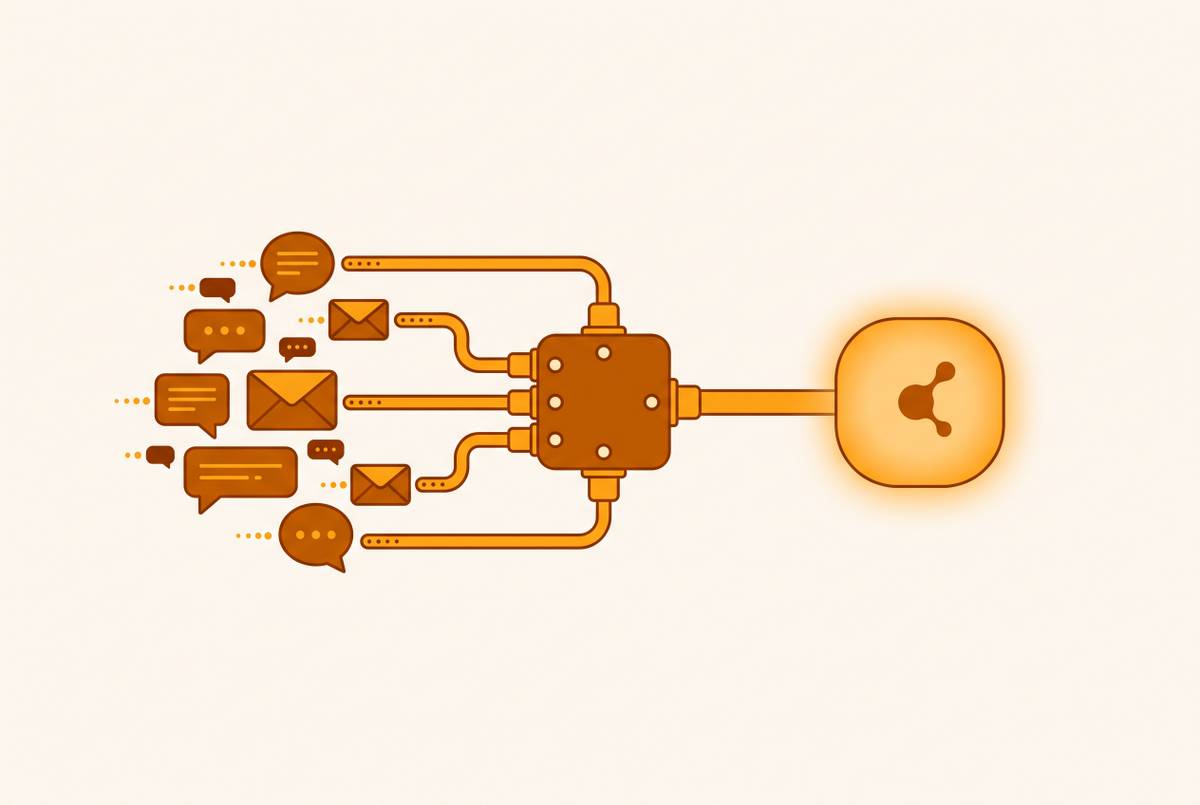
An inaccurate summary rarely stays confined to the document it was written into. Once meeting intelligence connects to a CRM, a project management tool, or a team's communication platform, an incorrect action item owner, a fabricated technical commitment, or a missed architectural decision gets written directly into the systems where the team actually does its work. Fixing it after the fact requires finding the error, tracing it back to the meeting that produced it, and manually correcting every downstream record it touched.
The sales and customer success case makes this concrete. It lands in the account record, and the next interaction with that customer gets built on top of it. The mistake compounds across the relationship and does not stay contained to a single artifact.
Connecting meeting intelligence directly to downstream tools genuinely saves time, but the benefit only holds up if the underlying summary is accurate. The error surface is particularly acute because the summarizer inherits the transcript as fact and has no way to recover information the transcription stage lost. Deciding which fields an integration is allowed to update automatically, versus which require a human to approve first, is the control that limits how far an error can travel without giving up the time savings automation provides.
The longer-tail risk sits in organizational memory itself. When meeting summaries become the substrate teams search to answer questions like what the infrastructure team committed to across the last four sprint reviews, a pattern of summarization errors in technical meetings does not just produce a handful of wrong documents. It corrupts the knowledge layer that every future query draws from, so the longer those errors sit unexamined, the more the damage compounds. Whether that routing creates value or spreads errors depends entirely on the accuracy of the summary feeding it.
Immediate steps teams can take to improve technical meeting summary quality
Improving summary quality is not one fix but a set of interventions that apply at different stages, and treating them as interchangeable leads to solving the wrong problem. The right fix depends on where the failure is actually occurring.
At the transcription stage, mic quality is the single highest-leverage intervention you have, because a clean audio signal stops a wide class of downstream errors before they start. Keeping participant counts manageable in any one call reduces the odds of a speaker attribution error creeping in.
At the summarization stage, "important" needs an explicit, per-meeting-type definition written into the prompt. For the highest-stakes technical meetings, you need to decide on model tier deliberately, not pick a default setting for cost reasons alone.
At the evaluation stage, ROUGE should stop functioning as a primary quality gate. Replace it with rubrics built around meeting-specific error types, groundedness, completeness, factuality, and conciseness, and treat domain-specific completeness criteria as the dimension that carries the most weight for technical meetings specifically.
At the routing stage, define in advance which fields an integration is permitted to update automatically and which require a human to sign off before anything gets written to a CRM or project tool. That approval layer contains the damage from an error without giving up the time savings that automation provides.
Circleback is built around this full pipeline: transcription across more than 100 languages, structured note generation, automatic action item capture and assignment, and direct routing into CRMs and project tools. The design premise behind all of it is straightforward: notes should be accurate and complete enough that the people in the meeting can stay present in the conversation rather than splitting their attention toward managing the documentation themselves.