AI Meeting Search Versus Manual Tagging for Knowledge Retrieval
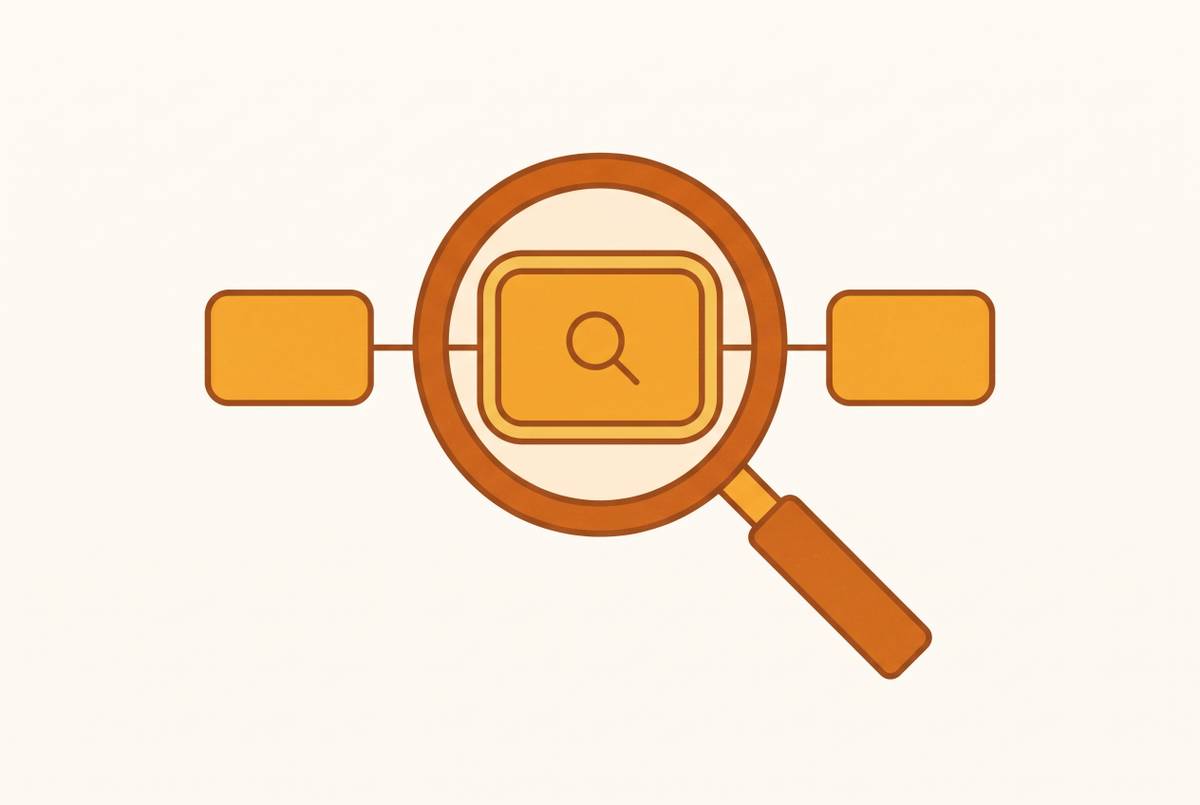
AI indexing captures decisions manual notes structurally miss.
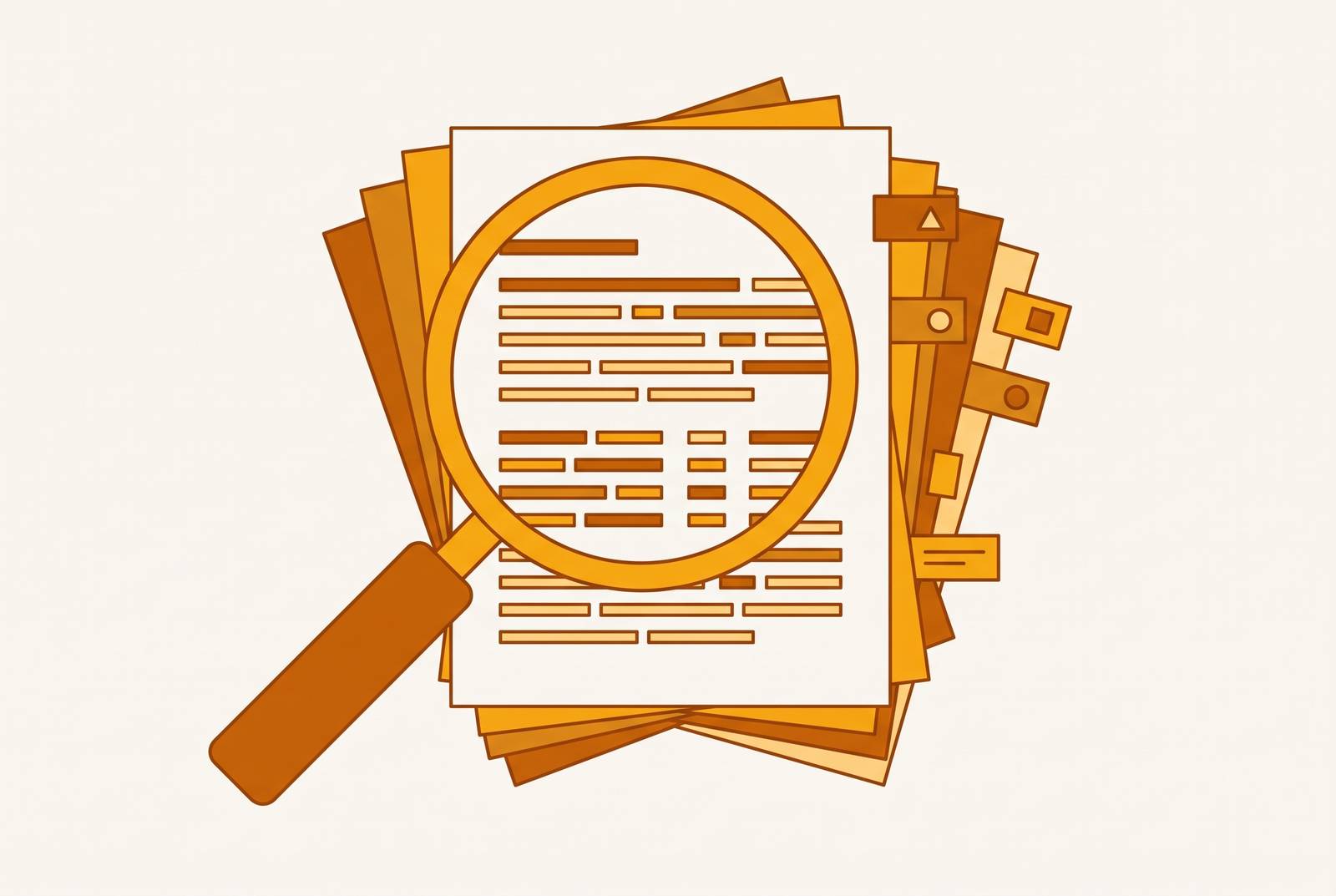
A team cannot retrieve a decision it never wrote down, and the person deciding what gets written down is almost always guessing. AI meeting search changes that equation by indexing what was actually said. Entire categories of commitments, objections, and dissenting opinions become retrievable for the first time.
Why manual tagging fails as a knowledge retrieval strategy
The person taking notes in a meeting is doing two jobs at once: participating in the conversation and deciding, in real time, what deserves to survive it. Whatever gets tagged reflects what seemed important to one person at that moment, not what the project will actually need three months later when a client disputes a price or a new hire asks why a vendor was chosen over a competitor.
The knowledge most likely to get lost this way is also the knowledge most likely to matter later. None of this is a discipline problem that better note-taking habits would fix. It's a structural limit on what a single human filter can capture while also doing their job in the room.
That limit compounds once an organization has more than a handful of meetings to track. In practice, nobody remembers that, and the archive becomes a place where information goes to become unfindable.
Converting speech into structured, searchable knowledge
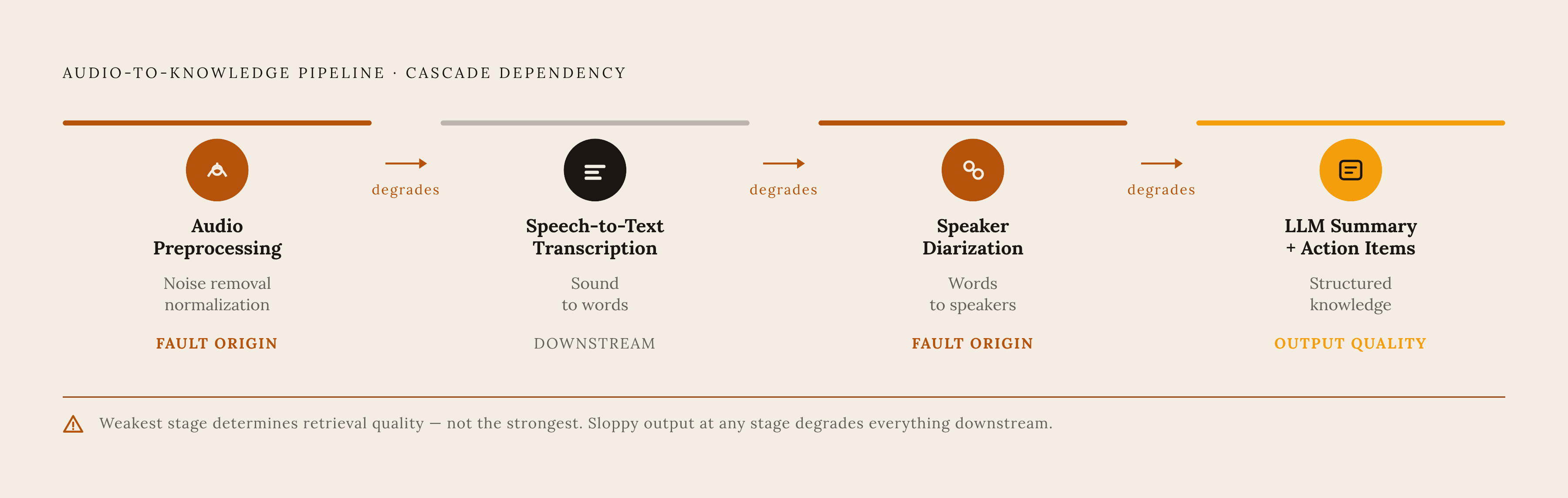
AI meeting transcription works as a pipeline, not a single step, and the quality of the final output depends on every stage performing well, not just the last one. Four stages do the work: audio preprocessing cleans the signal, speech-to-text transcription turns sound into words, speaker diarization assigns those words to the right person, and a language model summarizes the conversation and pulls out action items. Think of it as a team of stenographers handing work down a line: sloppy output at any one stage degrades everything that follows, no matter how good the other stages are.
Transcription accuracy on clean audio has become close to a solved problem among serious platforms, with production systems benchmarking under 10% word error rate under good conditions. The harder cases, accented speech, dense technical vocabulary, multiple people talking over each other, are where platforms actually separate from each other, and independent testing shows real variation across vendors once conditions stop being ideal. That variation means a team that depends on accurate transcripts for retrieval later is trusting the weakest stage in the pipeline, not the strongest one.
Speaker diarization deserves particular scrutiny because its failures are quiet and compounding. Production systems like Circleback treat each stage of the pipeline, transcription accuracy, speaker diarization, and action item extraction, as a critical bottleneck, investing heavily in benchmarking under real-world conditions such as accented speech, overlapping speakers, and technical vocabulary, because errors at any stage cascade downstream and degrade what can actually be found later.
Even a transcript with near-perfect accuracy is chronological text with no semantic structure, and that alone isn't a knowledge base. Asking an AI model to find a specific decision across dozens of such files causes it to either hallucinate an answer or run into the limits of how much text it can hold in context at once. Accurate transcription is necessary, but it answers a different question than the one a team actually needs answered.
What a retrieval architecture requires
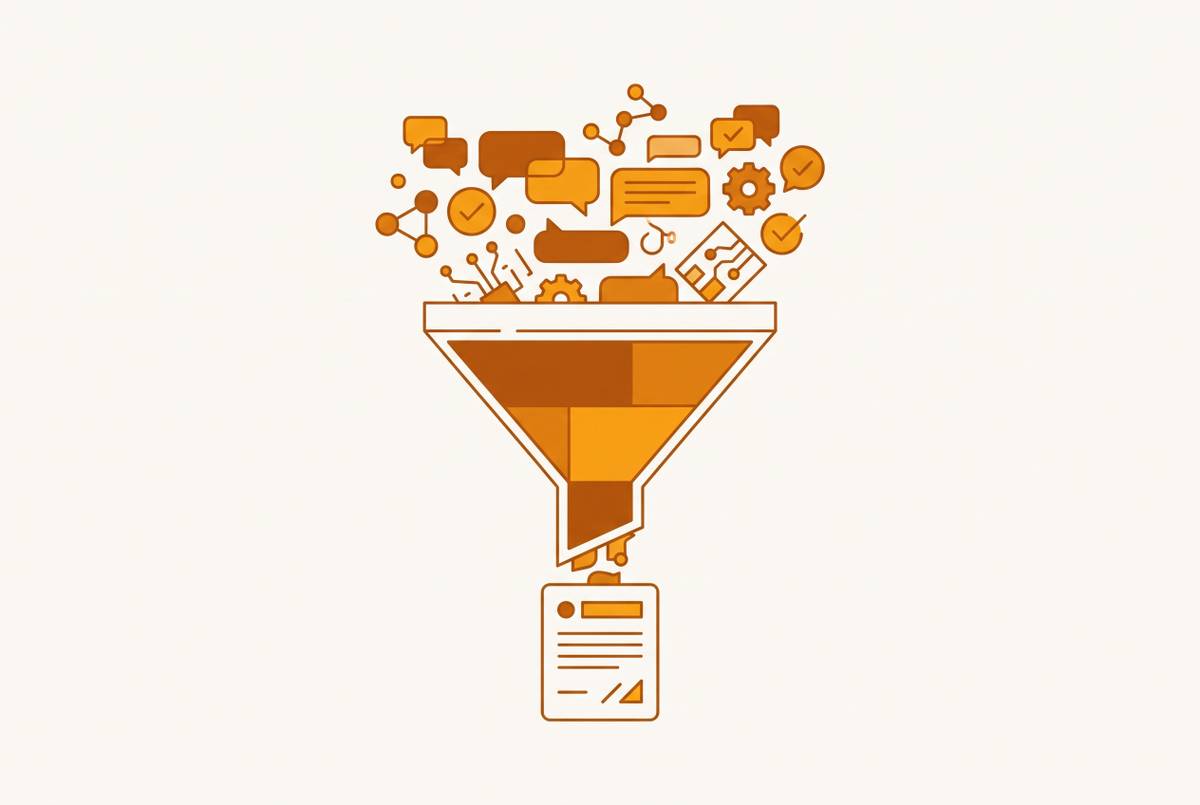
A transcript tells you what was said. It does not tell you what was decided, who owns what, or how this week's conversation connects to one from two months ago. Closing that distance requires an architecture most people have never thought about directly: Retrieval-Augmented Generation, or RAG. The transcript is raw material. The value comes from extracting decisions, topics, and action items out of that raw material and feeding them into a system that lets a team query past conversations the way they'd query a database.
A 60-minute meeting covers more than one subject, and a useful retrieval system breaks it into topic-centered chunks rather than treating it as one long block of text, so the "marketing budget" portion of the conversation gets separated from the "hiring update" portion before anything gets indexed. Later frontier models have narrowed that gap but have not eliminated it. Chunking a meeting into smaller, topic-bound pieces before indexing still produces more reliable retrieval than dumping a full transcript into a single context window.
The structure also has to be built for a machine to read, not a human. A "Meeting Purpose & Decisions" statement at the top of a note, declarative section titles, and content with conversational filler stripped out all help an AI system retrieve the right chunk quickly. The same formatting choices that make notes pleasant for a person to skim, casual phrasing, loose organization, chronological flow, actively work against a retrieval system trying to find the right fact fast.
This is where the real divide in the knowledge management market sits: not between tools that have AI and tools that don't, but between where that AI operates. A tool that adds AI search on top of an existing pile of documents is making a modest improvement to a legacy setup. A tool that uses AI at the processing layer, turning raw audio into structured knowledge before anything gets stored, is a different kind of system. The test is simple: does the tool capture audio and video natively? If it doesn't, it's AI operating at retrieval, and it can only ever find what a human already decided to write down somewhere.
Tools like Glean, which search across Slack, Drive, and Confluence, do valuable work unifying search across systems that already contain written content. Once decisions, topics, and action items get extracted and structured at the point of capture, a library of meetings becomes a queryable database of what an organization has actually decided.
The widening knowledge gap between tagged notes and AI-indexed meetings
The advantage of an AI-indexed archive over a manually tagged one doesn't stay flat. It compounds, because every new meeting adds value to a searchable system while adding cost and inconsistency to a manually maintained one. In week one, the benefit looks modest: less time spent typing notes during a call. By month six, what exists is an organizational knowledge base with a depth and coverage no human editorial process could match by hand.
Manual tagging degrades exactly when an organization needs it most. Search reliability drops at the same time the archive grows large enough that search would actually matter.
Onboarding makes the compounding advantage concrete. A manually tagged archive can't offer that at six months in, because by then its internal inconsistency has already outpaced any one person's ability to navigate it.
What AI search retrieves that tagged notes structurally cannot
Certain categories of meeting knowledge are invisible to tag-based search by design, and AI search recovers them by indexing what was said.
A verbal agreement made in passing, the kind of moment where someone says "what did we agree to on vendor pricing in Q2?" months later and nobody has a clean answer, usually never got tagged as a decision in the first place, because it didn't feel like one in the moment. Semantic search over a full transcript can surface that answer on demand.
The reasoning behind an overruled option rarely survives into notes. Teams tag what was chosen but not why the alternative lost, and a decision without that reasoning on record gets relitigated from scratch instead of revisited intelligently.
A question raised in January, revisited in March, and finally resolved in May forms a pattern no tagging system can trace unless one person happened to sit in on all three conversations and remembers the thread. A RAG-indexed archive can surface that arc on request, connecting conversations that happened months apart around a single topic.
Attribution of who said what, and when, depends on accurate speaker diarization, and that attribution gets flattened in note-based summaries into a vague "the team agreed to. Knowing which specific person made a specific commitment, in which specific meeting, is often the difference between a commitment that can be enforced and one that can be disputed.
Now it ends in a structured record that a project manager, a sales rep, a legal reviewer, or a teammate who missed the call can use directly, without tracking someone down for a recap.
How meeting-heavy roles experience the retrieval gap differently
The retrieval gap costs the most in roles where meetings generate commitments that someone has to act on weeks or months later, and where losing that context has a price tag attached to it.
Founders and executives carry a version of this problem at the scale of an entire company. When that memory fails, or when the founder leaves the room, the reasoning behind major decisions goes with them unless it was captured somewhere searchable.
Consultants face a quieter version of the same risk across client engagements: commitments, scoping decisions, and verbal agreements made across multiple calls with multiple clients. Manual tagging demands discipline on every single call to keep that record intact. AI indexing demands none, because it doesn't depend on anyone remembering to flag the moment as important.
Customer success teams live inside a related distinction: the gap between "we said we'd look into that" and a precise record that on March 3rd, a specific account manager committed to delivering a specific item by Q2. Tools that index full meeting transcripts, Circleback among them, automatically capturing and organizing entire conversations, sidestep the manual tagging bottleneck by making everything searchable rather than just the fragments someone decided to highlight in the moment. For roles built around commitments made out loud and remembered later, that difference is the whole point.
Connecting meeting knowledge to the AI tools teams already use
An indexed archive of meetings only pays off if it reaches the places where people are already doing their work, rather than sitting in a dashboard nobody opens unless they remember to. The Model Context Protocol, introduced by Anthropic and since adopted across major AI platforms, gives meeting tools a standardized way to expose their indexed data to AI assistants. In practice, that means an assistant like Claude can query a team's full meeting history, pull up relevant commitments, and draft a follow-up without anyone switching tabs or copying text between windows.
Once a meeting tool connects this way, its contents stop functioning as a separate archive and start functioning as live context inside the tools a team already has open all day. Retrieval happens inside the existing workflow.
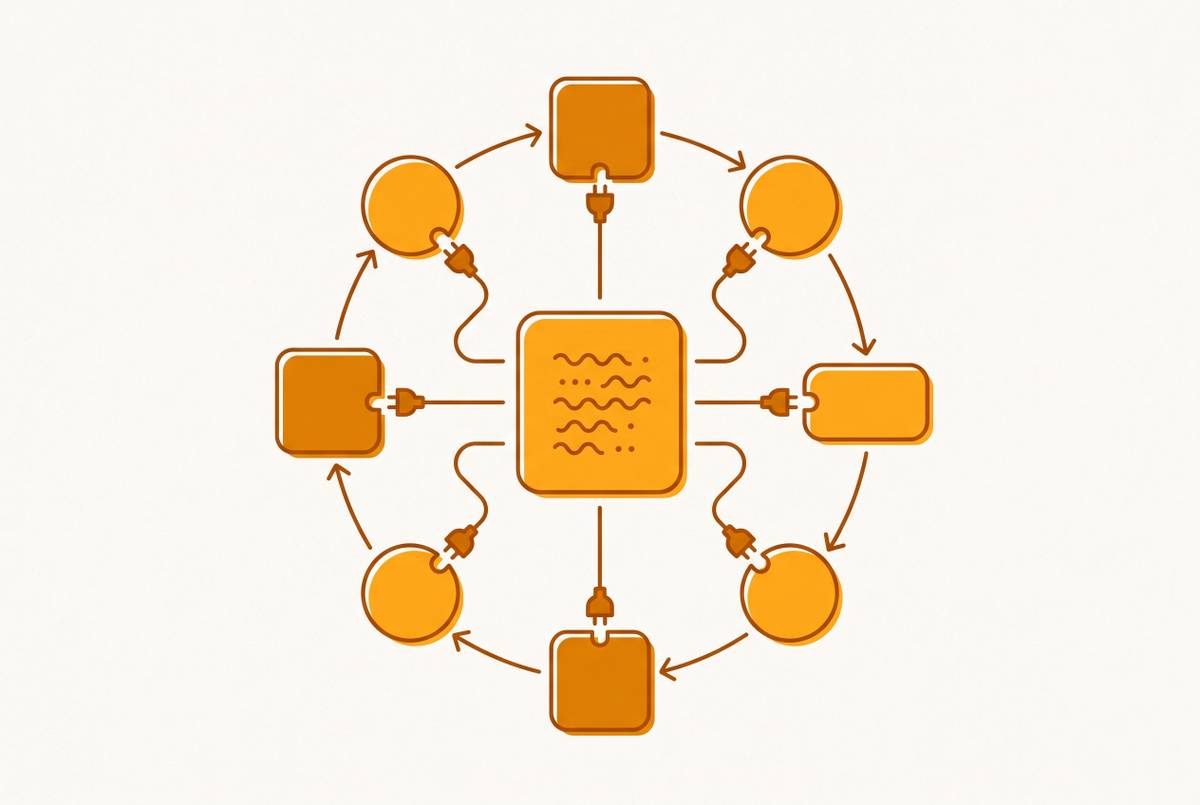
The same principle extends to CRM push, Slack routing, and project management integrations. An action item pulled from a meeting and logged automatically into HubSpot or Linear becomes retrievable through those tools' own search functions, joining the rest of the organization's data instead of sitting isolated in a meeting-specific silo. Circleback's own integrations illustrate what that looks like in practice, with native connections to HubSpot, Salesforce, Attio, Linear, Slack, Notion, Zoho, and monday.com, alongside an MCP connector and an API for teams that need to build custom routing on top. This closes the second half of the retrieval problem: finding the right meeting note is one task, and getting its contents into the system where someone will actually act on it is another, separate task that routing solves directly.
One caution belongs here.
Evaluating AI meeting search against a manual tagging workflow
Evaluating a meeting AI tool means testing the entire pipeline, from how it captures audio through how it structures that information to how it answers a question spanning months of meetings. A tool that fails at any single stage ends up reproducing the same blind spots as manual tagging, just with a bigger price tag attached.
Ask the tool to retrieve a commitment made by a specific person in a specific meeting. A wrong answer or no answer at all signals that diarization is failing somewhere in the pipeline, and that failure recurs in every action item the tool extracts going forward.
Ask a question that spans three months of meetings, something like "what have we decided about X since January?" A tool that can only search inside one transcript at a time hasn't solved the problem this piece has been describing. It has only made single-meeting notes faster to produce.
Check where the AI actually operates: at the retrieval layer, searching over documents someone already wrote, or at the processing layer, extracting structure from audio before anything gets stored. Only the second is capable of recovering what manual tagging misses, because only the second doesn't depend on a human writing something down first.
Check integration depth. Does the tool push action items automatically into the CRM, the project management tool, or Slack, or does it still require someone to copy and paste notes across systems by hand? That second pattern is the manual bottleneck wearing a new interface.
Consider the recording model, too. Bot-based capture, where a visible participant joins the call, and silent desktop capture carry different consent and visibility tradeoffs; the right choice depends on the meeting context. A team that runs these tests honestly will likely find that most of what their manual tagging workflow does today is a workaround for a tool that never had the full pipeline.