Contractor and Consultant Onboarding With Meeting Archives
Meeting transcripts let new contractors find decisions and reasoning without slowing the team.
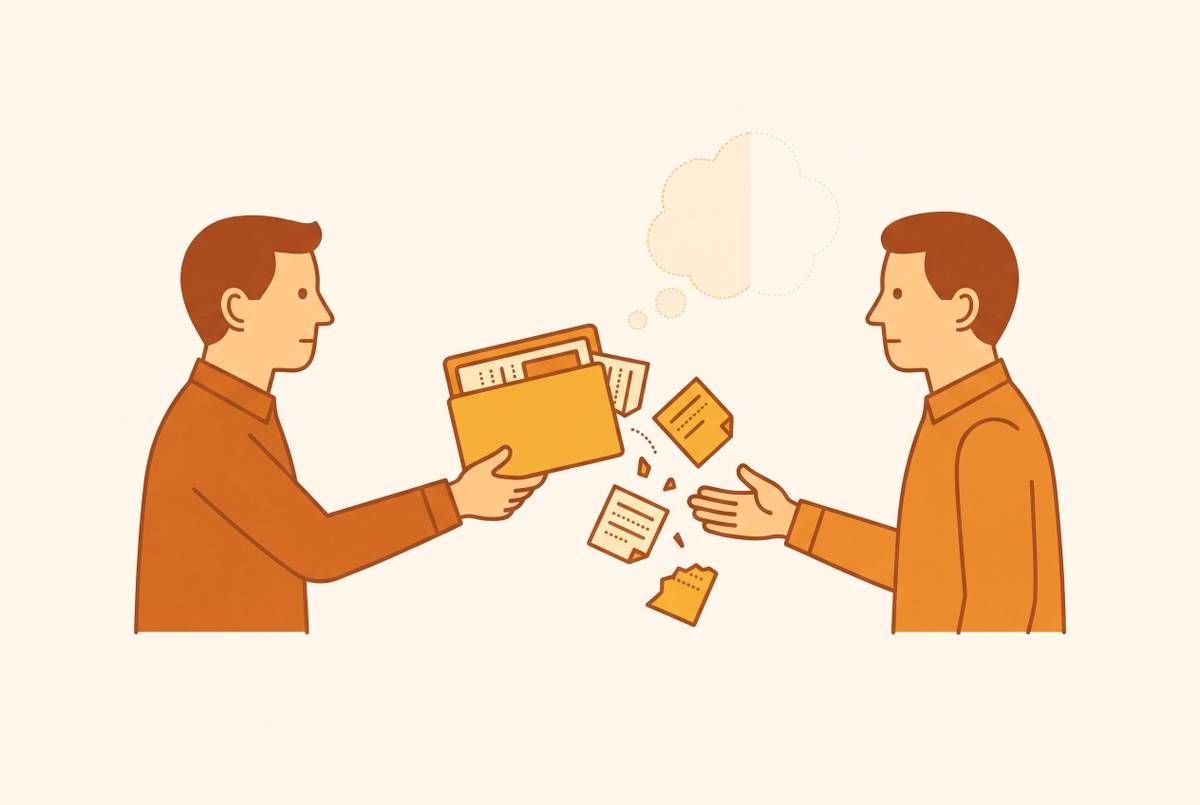
A contractor asks a question in the first week and gets a look back that says the team already covered this. That moment, repeated across a dozen projects and a dozen new hires, is the actual subject of this piece: not generic onboarding friction, but the specific knowledge gap that keeps external contributors dependent on the team for weeks after they should be contributing independently. Documents describe what was decided. They rarely capture why a particular path was chosen, what alternatives got rejected, or what constraints shaped the final call, because that reasoning happened out loud, in a meeting, and nobody wrote it down. A decision got made three weeks ago, the logic behind it lived entirely in that conversation, and a new contributor spends an afternoon re-litigating a question the team already settled, burning goodwill along with time. For a contractor billing by the day, that afternoon has a direct cost. Every hour spent reconstructing context that already exists somewhere in the organization is an hour not spent on the work the client is paying for, and a consultant has an added problem: client trust depends on demonstrating command of the situation quickly, and a question that reveals ignorance of a prior discussion reads as a failure to do homework rather than an honest gap in access.
What a meeting archive contains
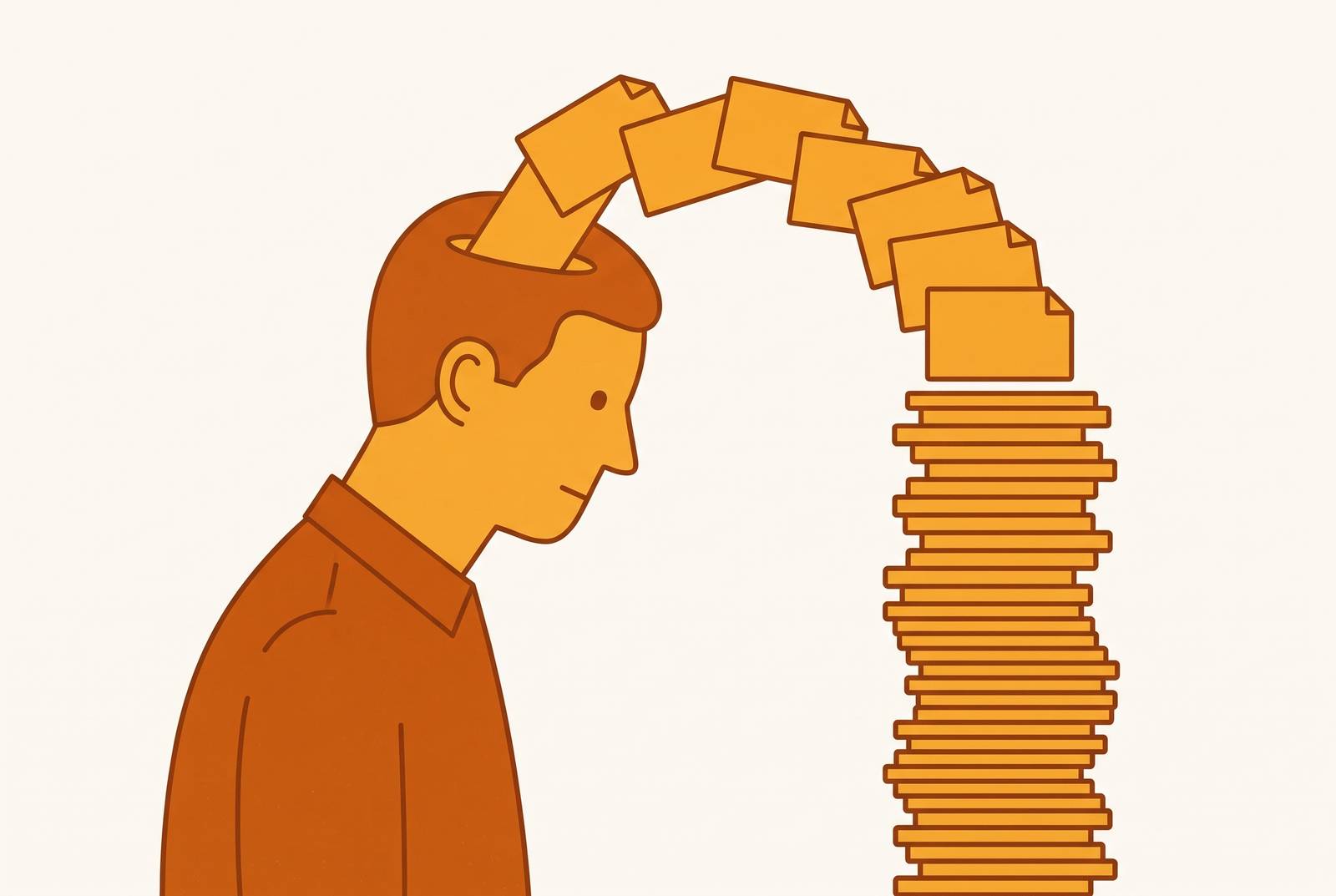
A meeting archive built on AI transcription is a searchable, speaker-labeled, structured record of decisions, commitments, and reasoning as they actually unfolded, rather than a pile of recordings waiting to be opened one at a time. Modern AI meeting notes typically produce three things: a verbatim, time-stamped, speaker-attributed transcript; a structured summary that pulls out key decisions and action items; and cross-meeting searchability that lets someone ask a question across the entire history of a project rather than hunting through individual files. Speaker diarization, the labeling of who said what, means a contractor can tell whether a given constraint came from the client stakeholder or from an internal engineer, and that distinction changes how the constraint should be handled. Raw transcript text is useful on its own, but the ability to ask "what did we decide about pricing in last month's stakeholder call?" and get a direct answer is a different category of resource. A document library or wiki holds the decision log: a meeting archive holds the whiteboard argument that produced it, the client call that prompted a pivot, and the tacit reasoning nobody ever formalized into a written document. When an engineer leaves a project, a successor can usually find the decision itself recorded somewhere, but not the meeting where the trade-off was actually argued through, and that is precisely the gap a meeting archive closes. It also requires no ongoing maintenance from a person, because it builds automatically from the meetings the organization already holds rather than depending on someone remembering to update a wiki page.
Reading a Meeting Archive as a New Contractor
A contractor who approaches the archive as a deliberate research task, with a sequence and a specific list of things to look for, can extract more organizational context in two hours than most teams hand over in a week of onboarding calls. The first step is scoping the request: ask whoever controls the archive for access to the meetings directly relevant to the engagement, stakeholder alignment calls, project kickoffs, retrospectives, and any meeting where a major decision was announced to the group. Before reading a single transcript in full, run a cross-meeting search for the project name, the key decision already known to be in play, or the constraint mentioned in the kickoff call, and let that search surface the meetings where the topic actually came up rather than reading everything chronologically from the start. Read for decisions, not for discussion. The useful artifact inside any meeting summary is the specific moment the group committed to a direction, a scope boundary, or a trade-off, and the general conversation leading up to that moment matters far less than the commitment itself. Speaker labels do more than attribute quotes: tracking who argues for what, whose objections get addressed and whose get dropped, and whose sign-off actually ends a debate, tells a contractor more about how decisions get made on this team than any org chart could. Watch for the same topic appearing across multiple meetings without resolution. Finally, cross-reference the action items assigned to people in a role similar to the contractor's own. If a prior contractor or a team member in a parallel position was handed recurring tasks, those tasks are likely to land on the new contractor as well, and knowing their history prevents the embarrassment and wasted effort of repeating work someone already did.
What to do when the archive is incomplete or access is restricted
An incomplete or access-restricted archive is the normal condition a contractor should expect, not a sign that the method above has failed. Access is commonly granted per meeting rather than globally, some meetings are marked confidential for good reason, and historical meetings that predate the organization's adoption of an AI notetaker simply are not indexed. The right response to these limits is a narrower, more specific request rather than a broader one: ask for the three or four meeting types most relevant to the engagement, such as kickoffs, stakeholder reviews, and technical decision meetings, instead of requesting blanket access, which raises legitimate consent and confidentiality concerns for the organization granting it. Where recordings simply do not exist because they predate the tool, ask the team directly for the three decisions or constraints that a newcomer most often gets wrong. Asking the team directly raises the same tacit knowledge the archive would have provided, through a person instead of a transcript. A partial archive still carries real value: two or three well-indexed stakeholder calls will reveal more about client expectations and prior commitments than a full handover document written after the fact ever can, because the handover document reflects what someone remembered to include, while the calls reflect what was actually said. Letting the AI-generated summary do all the thinking is a mistake, since summaries are a starting point rather than a final answer, and the contractor who reads the underlying transcript and pulls out the two real objections will consistently outperform the one who simply forwards the summary without opening it. Access, in other words, is a practical question and a legal one, and that question deserves its own treatment before any of this gets put into practice.
Recording consent and access rights contractors need to understand
Using a meeting archive is not a legally neutral act, and a contractor stepping into one should understand what consent was obtained when the underlying meetings were recorded. Consent is required at the moment of recording, not at the moment a contractor later accesses the archive, but a contractor reviewing meetings they were never part of should still confirm that the original participants were informed their words would be searchable by future team members, including outside contributors. Illinois' Biometric Information Privacy Act requires written consent before an organization collects, stores, or uses biometric data, and the voiceprints that AI notetakers generate to perform speaker identification may fall under that definition, so an archive built on speaker diarization carries added compliance weight for any engagement touching Illinois. Under the EU AI Act, AI notetakers used for recruitment or employee monitoring purposes may be classified as high-risk AI systems, which triggers log retention and human oversight requirements, and a contractor working with EU clients or EU-based teams should confirm the organization has already assessed whether its notetaker use falls into that category. A conversation recorded in a legal context carries its own risk: where a vendor's terms of service authorize third-party access to recorded data, a recording of an attorney-client conversation transcribed by that vendor may waive privilege, so a contractor working in a legal or compliance capacity should flag this before relying on an archived client call. No federal bill titled the "AI Transparency in Recordings Act" has been introduced in Congress. Various AI transparency and disclosure bills have been proposed, among them the AI Labeling Act of 2026 and the AI Foundation Model Transparency Act of 2026, but none of them specifically requires disclosure when AI is used to record, transcribe, or analyze a conversation, and the federal legal landscape on this question remains unsettled. The practical step for a contractor is to confirm with the organization, before accessing an archive, that participants were notified their meetings would be stored and searchable, and that the contractor's own access falls within what was originally disclosed to them.
How AI Meeting Tools Make the Archive Searchable
A useful meeting archive makes the content searchable across meetings and connectable to the other places a contractor actually works, which is what separates it from one nobody actually uses. Cross-meeting search, the ability to ask something like "what was decided about the API contract across all Q2 engineering meetings" and get back a synthesized answer rather than a stack of transcripts to open one at a time, is what separates genuine meeting intelligence from a passive recording library. The practical shape of this looks concrete rather than abstract: asking Claude to summarize every product decision made in the last two weeks pulls directly from the underlying meeting data, and asking Cursor to generate a ticket based on what engineering agreed to in yesterday's standup works because the source material is already there to draw from. The distinction that matters most for how this functions is between a static file upload and a live connection through a real-time integration protocol. A file upload gives an AI system a one-time snapshot, frozen at the moment of upload, while an MCP server lets the AI query meeting data in real time, pulling only the specific piece that's relevant to the question being asked rather than forcing it to reason over a stale dump of text. Integration with CRMs, project management tools, and communication platforms keeps meeting context from staying trapped inside a single app: action items route out to tools like Linear or Asana, decisions surface where the team already talks in Slack, and CRM records update with what was actually said on a client call rather than a paraphrase written up later. Evernote's AI Meeting Notes feature illustrates both the promise and the current limits of this category. It records meetings directly within the app, for both in-person and remote sessions, generates transcripts with speaker recognition, and offers live transcription in a floating panel during the meeting itself, and the resulting transcripts and summaries are searchable within the workspace. It also requires an internet connection for AI processing and does not yet support transcript download, which matters for a contractor who needs an offline or portable copy of the record. Slackbot, available on Slack's Business+ and Enterprise+ plans, functions as a connective layer rather than a capture tool: it summarizes shared transcripts, routes notes into the right channels, automates follow-ups, and pulls due dates and decisions from multiple meetings, including ones originally summarized by a third-party AI notetaker, putting the archive where the team already communicates instead of leaving it isolated in a separate application.
How organizations should structure meeting archives for contractors
Everything above describes what a contractor can do with an archive that already exists. The organization on the other side of that engagement has its own work to do, and it starts with a basic architectural choice: whether the memory builds automatically from meetings as they happen, or whether it depends on someone remembering to write it into a knowledge base and keep that record current. Automatic capture is the precondition for an archive that is actually complete by the time a contractor needs it, because a knowledge base that depends on manual upkeep degrades the moment the person maintaining it gets busy. Tagging and categorization at the moment of capture cost the organization almost nothing in the moment and pay back immediately the first time a contractor needs to pull up every stakeholder alignment meeting for a given account rather than scrolling through a chronological list hoping to recognize the right one. Organizations should also decide, in advance and explicitly, which meeting types get archived and which do not: team banter, sensitive HR conversations, and personal chats have no business being transcribed and stored at all, and having that policy settled before a contractor ever arrives avoids an uncomfortable conversation later about what they were able to see. Whether the recording tool announces itself as a visible bot in the call or runs as a silent desktop process is a policy decision with direct consent implications that connects straight back to the question of what participants were actually told, so organizations should document which approach they use and why, so a contractor understands what kind of archive they have been given access to. Access itself should be tiered rather than uniform: a contractor onboarding onto a single client engagement needs a narrower scope than a full-time employee does, and building that tiering into the archive from the start avoids the awkward experience of retroactively restricting someone's access after the fact, which tends to signal that the organization never thought the problem through. The single most immediately actionable step an organization can take is building a deliberate archive review into onboarding itself: a curated list of three to five past meetings representing the most important decisions and constraints relevant to the engagement, handed to the contractor on day one rather than left for them to stumble across on their own.
What a contractor who uses the archive well can deliver differently
A contractor who has done this work arrives at a client conversation already knowing which objections were raised and resolved, rather than raising them a second time and wasting the room's time. That contractor writes a proposal that accounts for a constraint the client mentioned in passing three meetings ago, instead of producing a plan that technically works but ignores a boundary the client already drew. They ask sharper questions in the first week, because the questions that reveal unfamiliarity with prior discussions have already been answered by the archive before the meeting starts. Over the course of an engagement, that difference compounds: fewer days spent reconstructing context that already existed somewhere in the organization, and more days spent on the work the client is actually paying for. The organizations that build their archives with this use in mind, and the contractors who learn to read them as a research task rather than a pile of recordings, are the ones who turn a meeting archive from a compliance artifact into the fastest onboarding tool either side has.
Sources
- How to onboard independent contractors
- Contractor Knowledge Transfer Plan Template - KORE1
- 8-Step Process for Contractor Onboarding Success - Venn
- 12 Best AI Notetakers for Meetings in 2026
- GitHub - Meeting-BaaS/meeting-mcp: Model Context Protocol server for AI assistants to create meeting bots, search transcripts, and manage meeting recordings. · GitHub
- Model Context Protocol
- AI notetaker
- Best AI Meeting Notetakers for 2026